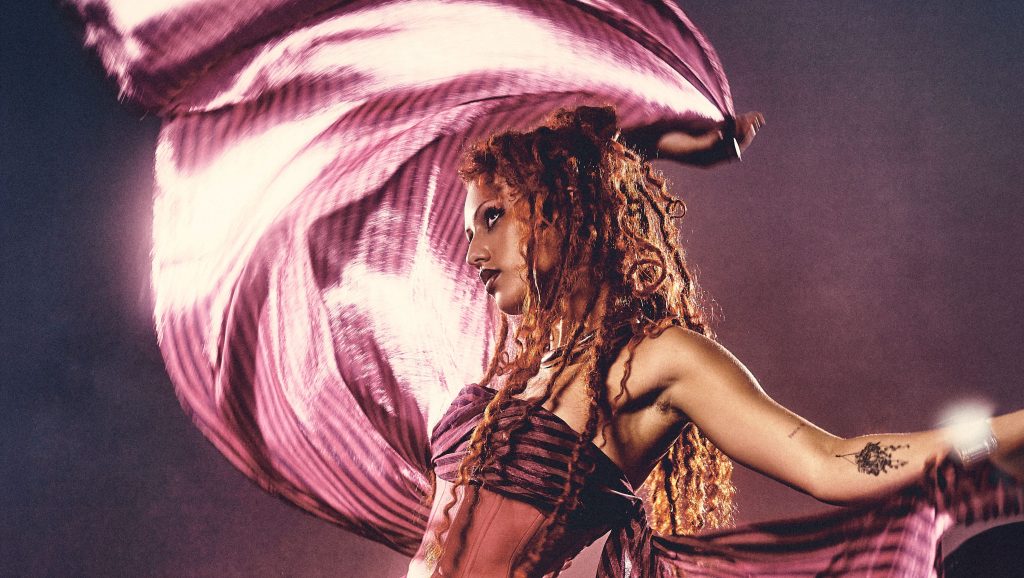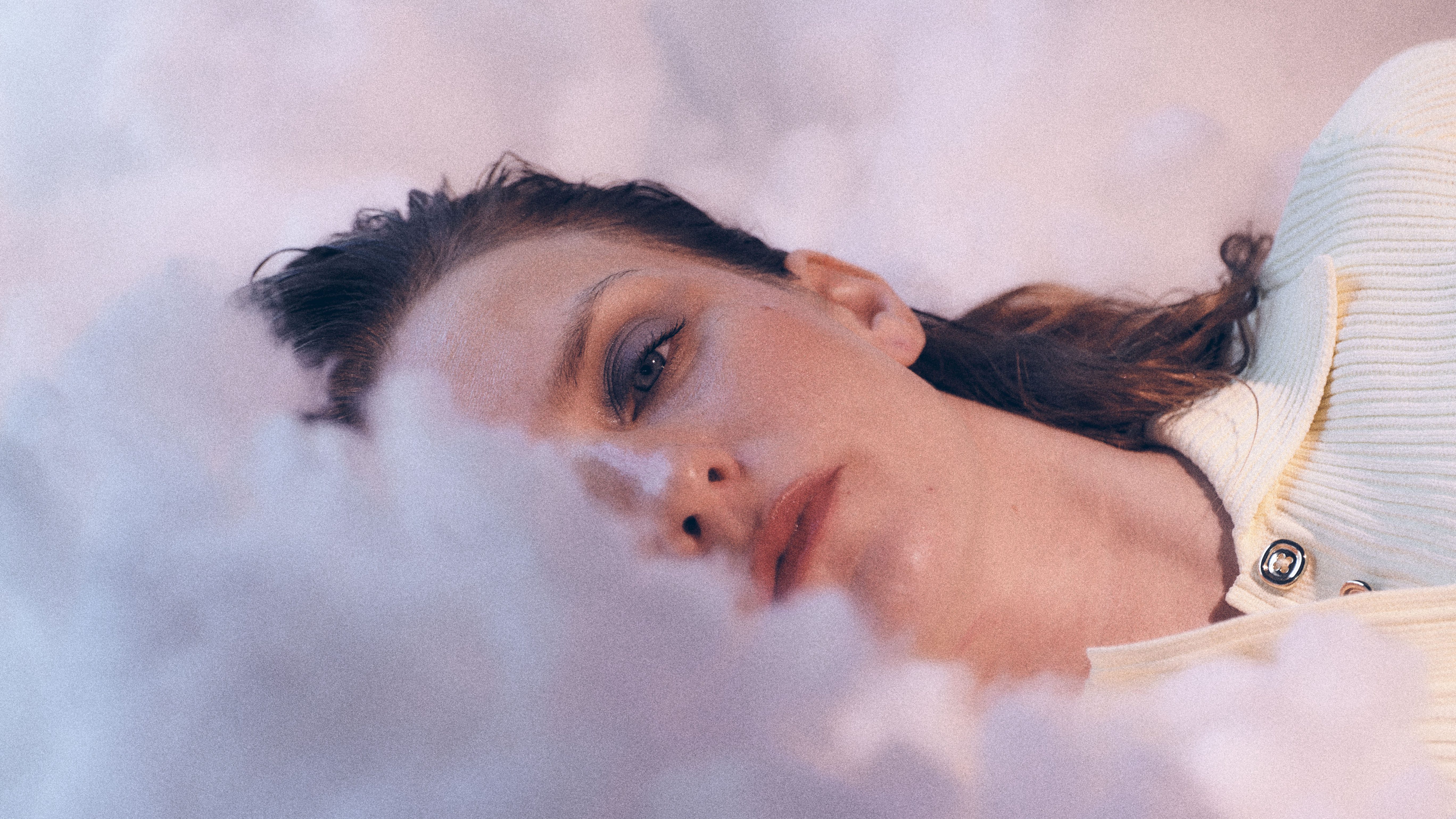
“If I’d been born 15 years later, I think I would have pursued football more seriously,” actress Faye Marsay tells Principle over Zoom before we get down to discussing her dark and gritty new Netflix drama, Adolescence.
“I loved football. When I was really young, I played for a local team in Middlesbrough, and they were a great bunch of girls. Sometimes, I played against Jill Scott, which is amazing. She played for a team called Boldon, and we faced each other as kids. She probably doesn’t remember me now, but I distinctly remember this tall, brilliant girl. Their team was excellent. Football was massive in my family—it’s like a religion back home.”
Sadly, a knee injury put an end to Faye’s dreams of becoming a professional footballer, but it led her to pursue another passion: acting.
PHOTOGRAPHY
David Yeo
FASHION
Tim Brooks
HAIR
John Katsikiotis at Carol Hayes Management
using Color Wow
MAKE-UP
Levi-Jade Taylor at Carol Hayes Management
using Tatcha for skincare and Vieve for make-up
PHOTOGRAPHER’S ASSISTANT
Alex Forsey
“I always knew I would leave Middlesbrough—I just didn’t know where I would go,” she explains. “I knew I wanted to act, and in those days, the path was to head to London and attend drama school. So from quite early on, I had my eyes on that.”
After training at the Bristol Old Vic Theatre School, Faye went on to land major roles in The White Queen, Pride, Black Mirror, Game of Thrones, Andor, and Ten Pound Poms.
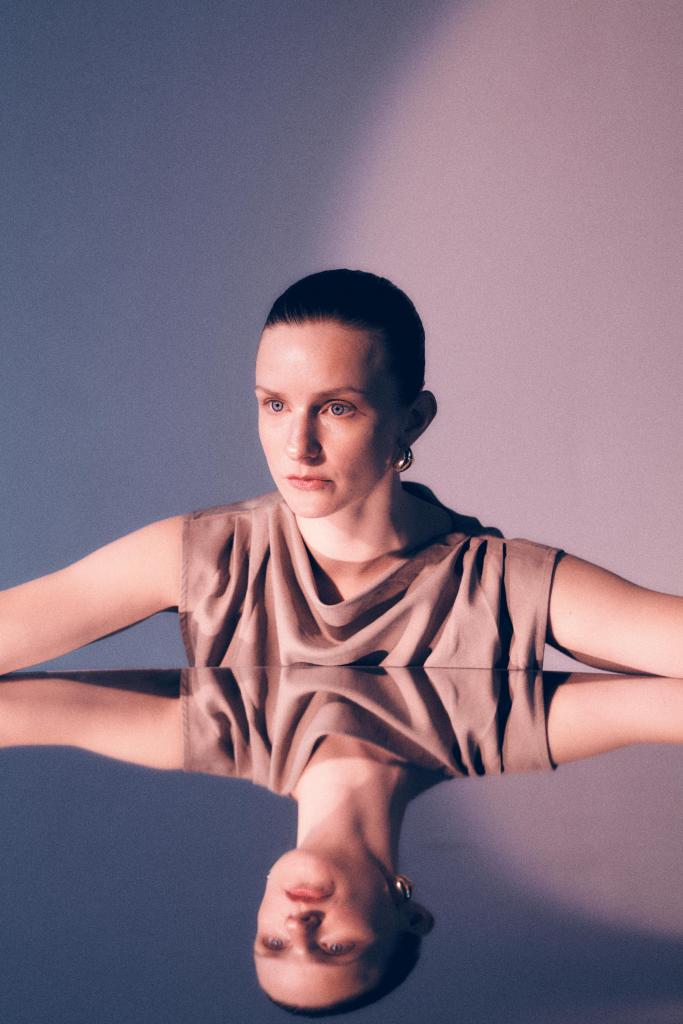
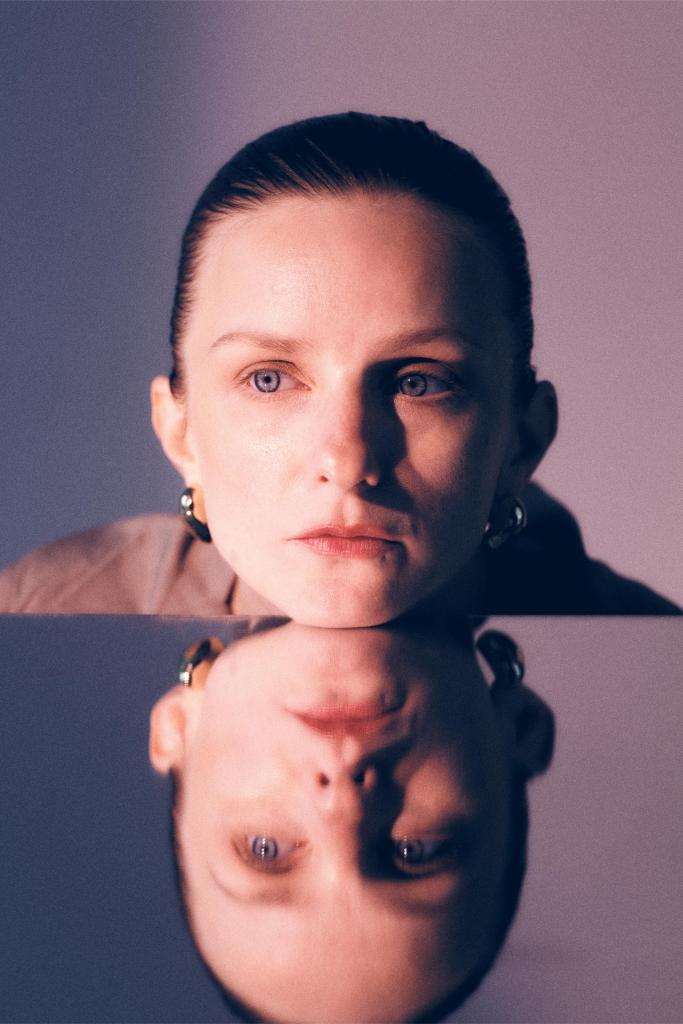
Top French Connection / Earrings Jigsaw
In Adolescence, she plays DS Misha Frank, investigating the murder of a schoolgirl at the hands of her 13-year-old classmate. The subject matter is shocking, dark, and deeply disturbing – but, as Faye points out, it’s also horribly relevant.
“What struck me most when I read the script was how current it was, how necessary the conversation is, and how important it is to explore these issues through art – whether that’s TV or film – to facilitate discussion,” she says. “It raises questions about the state of our society, what our children are consuming on their phones, their attitudes toward each other, and so many things that feel increasingly relevant.”
The four-part series unfolds in real-time and was co-written and produced by actor Stephen Graham, who also stars as the father of the accused teenager. Despite the heavy subject matter, Faye describes working alongside Graham as a dream experience, crediting both him and his wife, actress-producer Hannah Walters, for nurturing a comfortable and supportive set.
“Stephen creates an environment where everyone feels valued, no matter their role,” she says. “It’s like a football team – he’s the Pep Guardiola, and we’re all working toward winning a championship. He genuinely wants everyone to be at their best and fights for every single person on set. It’s a really safe and supportive environment to be in. He genuinely cares – not just about the work, but about the people involved in making it. I don’t want to sound gushy, but he’s a really lovely man who cares about his job and about everybody else.”
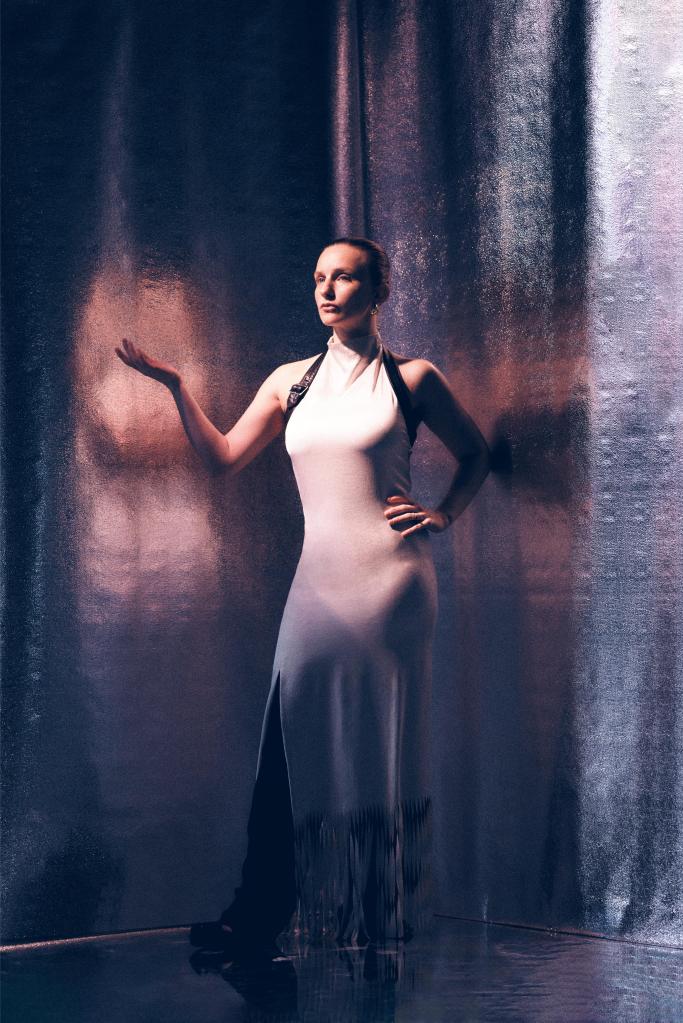

Dress Nanushka / Trousers Nanushka / Shoes Pretty Ballerinas / Earrings Jigsaw
In this interview, Faye also discusses the damaging effects of social media on young people, why her early role in the feel-good film Pride remains one of her most cherished, and why the TV and film industry needs more working-class voices like hers and Stephen Graham’s.
Adolescence is a pretty tough drama which raises questions about what kids these days are seeing online and how that affects their interaction with each other. Does this development unsettle you?
I know I sound old saying this, but I grew up without a phone until I was 15, and it’s just such a different world now. Kids have access to things that are difficult to monitor and even harder to protect them from. The script really explores those challenges, as well as the overall mental state of young people today and how something like this could happen. It’s not just about children from “bad backgrounds” or abusive situations – it’s about the world we live in now. With social media, something like this could happen to anyone.
There seems to be a lot of lawlessness now. Once upon a time, bullying happened at school, it was name-calling or maybe getting pushed in a corridor. But these days, it feels so much more extreme. Do you sense that shift?
I think it’s more insidious now. Bullying doesn’t just happen in the playground – it follows kids straight into their homes, into their bedrooms, right in the palm of their hands. That’s terrifying. It puts so much pressure on young people. Compared to when I was growing up, I think there’s a real disconnect. In one sense, they’ve never been more connected, but in another, the eye-to-eye, human-to-human interaction has never been so distant. That lack of real-life connection might be feeding into some of the issues we’re seeing now. Young people are under a huge amount of pressure, and I really feel for them.

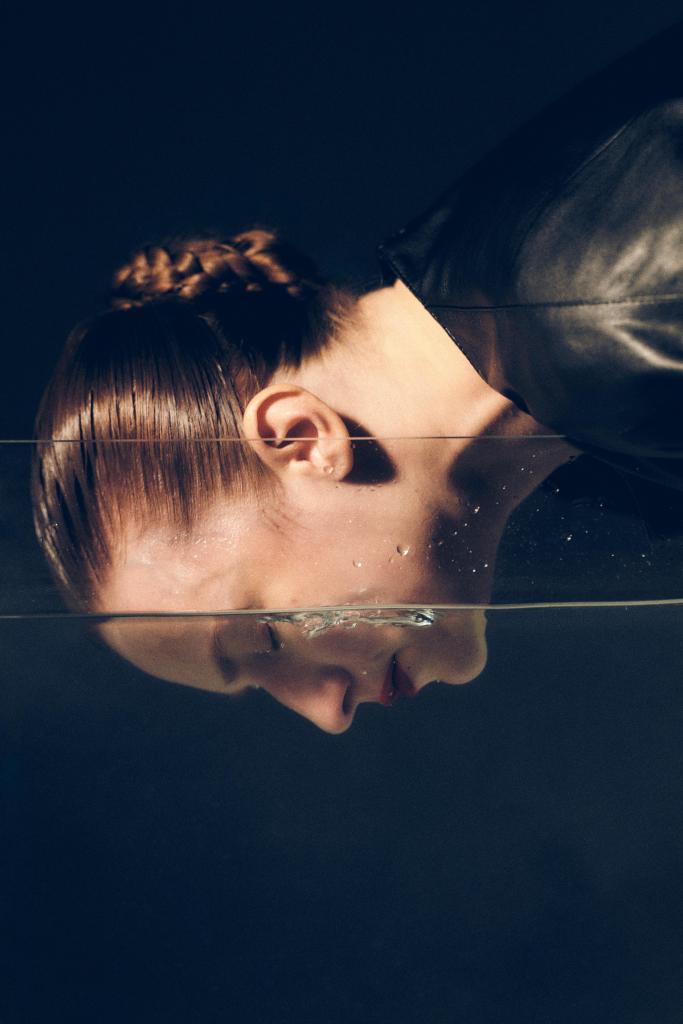
Top Julia Allert at Wolf&Badger
Social media can bring people together from all over the world, but at the same time, it makes them so insular. They’re so focused on their phones that they never actually talk to the person sitting next to them. Some kids become shy and struggle to communicate in real life, so they form friendships online, which can sometimes be toxic.
Yeah, but they can also find friendships that allow them to express themselves. It’s not that all social media is bad – it’s about how it being monitored and guided. Shy people can find community through social media, but of course, we all know about the darker side of it as well.
Agreed. Each of the episodes of Adolescence is filmed in one continuous shot – that must have been quite a challenge, like preparing for a play!
Yeah, that’s exactly what it was. We had two weeks of rehearsals, essentially preparing for a play. Everyone – whether you were the lead, had one line, or just walked through the frame – was part of that process. There was no hierarchy, and that created a real sense of teamwork and family on set. That was so important, not just because of the technical demands, but also because of the subject matter. The story is harrowing and emotionally challenging, so you have to be completely focused. When you’re filming in one take for an entire hour, you can’t afford to slip up—one mistake could ruin the whole shot.
That’s such an intense way to work.
Yeah, but I think it was crucial that Phil shot it like this. Nowadays, people watch TV while scrolling on their phones, but you can’t do that with this show. There’s no room for distraction because the camera never cuts away – you have to follow the story the whole way through. And that makes the show much more intense, but it also reinforces the point it’s trying to make.
Phones feel like they’ve become part of our bodies. We seem to have lost the simplicity of days gone by!
I think we feel that way because we remember a time when human connection was much easier. But at the same time, we have to move with the times and adapt to technology. It’s a tricky balance.


Dress Noon by Noor / Boots Dear Frances
You’ve had such a varied career with so many different roles. Can you pinpoint a few that felt particularly pivotal – ones that changed the course of your journey?
One that stands out is Pride, the film. That was early in my career. It was such an important story, a piece of history that many people didn’t know about. And working with that incredible cast was an amazing experience. Black Mirror was another big one. I love Charlie Brooker’s work – it’s terrifying because it hits so close to home. That series was something I really wanted to be a part of. Of course, Game of Thrones was a huge thing to be a part of and I was really well looked after on that job. And Star Wars Andor – that was just so fun.
You mention all those shows so casually! You must look back sometimes and think, “Wow, I’ve done a hell of a lot.” And all in just over a decade!
Yeah, I honestly can’t quite believe it sometimes. I do get imposter syndrome from time to time, but I think most people in this industry do. But I know I’m very lucky, and I don’t take it for granted.
Just going back to Pride – It was such a beautiful film. You mentioned earlier that it was one of your pivotal roles—does it still hold a special place for you? Especially now that they’re making a Pride musical for the West End, which is so exciting! It feels like the perfect story for that.
Even at the read-through, I remember sitting with Andrew Scott on one side and Imelda Staunton on the other, just not knowing where to look. And sitting with Bill, talking about music – it was such a surreal and special experience. The whole thing felt like one big family. The cast was incredible, and I’m still in touch with so many of them. Jess Gunning, for example, has gone on to do amazing things—as have they all. I still talk to Jess, Liz White, George Mackay, and the rest of the lads. I remember before we started filming, we did some “research” by going out in London. I can’t quite remember if it was Freedom or another club, but we spent time in these spaces to get a feel for the energy and the atmosphere. Some of the guys even got up on stage and took part in competitions with the drag queens! We really tried to bond as a group, and it made such a difference. It was just a brilliant time. I had this amazing haircut, everyone was so passionate about the project, and we all understood how important the story was—honouring Mark Ashton and the real people behind it.
As you said before, it was a story that most people didn’t know about, and suddenly it was being shared with the world. And it was an LGBTQ+ film that didn’t have a miserable ending.
I’m so proud of that film. It meant a lot to so many people in the community, and I’ll always be grateful to have been part of it.


Top Sandro
You mentioned Game of Thrones and Andor – being on massive, big-budget productions must be a huge contrast to smaller UK productions. What’s the difference between working on something of that scale versus a smaller, more intimate British production?
Honestly, in terms of the actual work, there isn’t much difference. The British productions I’ve been part of are just as passionate, just as well-run, and filled with incredibly talented people. The only noticeable differences are logistical – bigger unit bases, more trailers, larger crews. The catering can sometimes be a bit fancier, but at the end of the day, the process itself remains the same. For me, it doesn’t matter whether I’m on a Star Wars set or in a car park in England filming an indie drama. It’s about the story we’re telling. I know that might sound strange, but once you’re in it, you don’t really focus on the scale – you just focus on doing your job.
And speaking of Star Wars, it has such a massive and passionate fan base. Your character in Andor was a queer character, which is a big deal for a franchise like that. Did you have any concerns going in?
Not really. I mean, Star Wars fans are generally wonderful – kind, inclusive, and incredibly loyal. For me, it was about normalising the normal. Screenwriter Tony Gilroy has mentioned that my character and her partner are the first openly queer characters in live-action Star Wars, which is a significant milestone. But at the same time, it was just another relationship – two people who happen to be women. On one hand, it’s important to acknowledge how groundbreaking that is. But on the other hand, I wanted it to feel natural, not like something that needed to be dissected or overanalysed. I suppose there was a small part of me that didn’t want people to pick it apart, because we worked hard on making it authentic. And ultimately, if someone takes issue with the simple existence of a queer relationship in a galaxy far, far away, that says more about them than it does about the story. But honestly, the response was incredible. I didn’t receive a single homophobic comment or any negativity, which is pretty remarkable considering how polarized things feel right now.
That’s really reassuring to hear. The world feels so divided at the moment—everything is so extreme, and it’s the loudest voices at both ends of the spectrum that cause so much of the noise. But I think most people just want to live their lives without all the drama. It’s exhausting.
Exactly. If you’re genuinely upset about two people loving each other, you really need to take a step back and ask yourself why. Of all the issues in the world, why is that the thing that makes you angry?
Amen!
There are far bigger problems out there. If the existence of queer love in Star Wars is the thing that gets you riled up, I think you need to re-evaluate your priorities. It’s tough to see how much has changed. But I still believe in progress. I think, ultimately, love will always win.

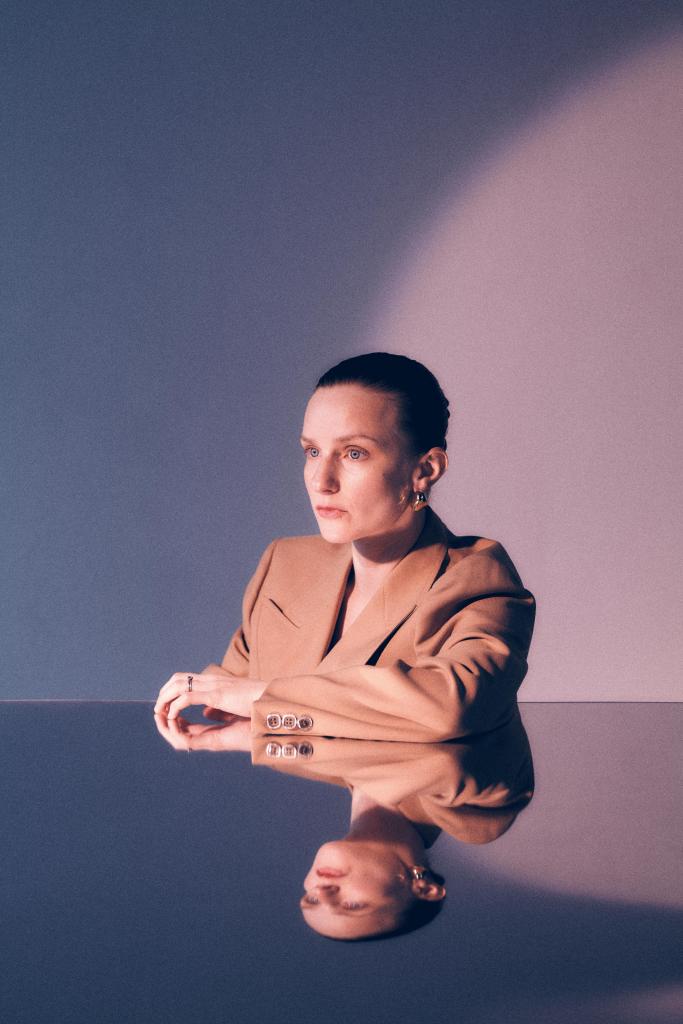
Blazer Cenci Vintage / Earrings Jigsaw / Rings Faye’s own
TV and film industry is very middle-class dominated and quite difficult for others to break into. You’ve obviously found a way in – not easy, but you’ve managed. Do you think there’s still that kind of class divide in the world of film and TV?
Yeah, I do, because I think opportunities and being able to take advantage of opportunities is the big issue. A lot of people in working-class areas don’t have the money to travel to auditions. They don’t have programmes available to them to get into these things. I had to work really hard – really hard – and was lucky enough to get into Bristol Old Vic and get help to get through that course. Obviously, my parents helped where they could, but I had to make it work however I could. I don’t know the exact figure, so don’t quote me on this, but I read somewhere that either around 8% of the industry comes from a working-class background. And that’s across everything – not just in front of the camera but behind it as well. That’s kind of telling and difficult to digest.
How can we fix that?
I think it’s about putting opportunities in front of people who otherwise wouldn’t get them. If you live in an area where the funding has all but disappeared, and your family can’t afford to pay for travel or other expenses, accessibility becomes a huge issue. There’s a lot of work to be done on that – 100%. We had a very northern, very working-class production team on Adolescence. A lot of us came from humble backgrounds, so there was this shared understanding and camaraderie. It felt like something truly unique. I remember feeling, “This kind of thing isn’t supposed to happen to us where we come from.” So, to be part of that group of people who worked their asses off to get here – it means a lot. That’s not to say that being middle class is a bad thing. That’s not how I see it. I have wonderful friends from all walks of life. But you’ve got to level the playing field and give people the opportunity. If they don’t even have access to that opportunity, how can they get in the door in the first place?
A new series of Ten Pound Poms is coming up. What can we expect from that?
Annie is trying to break free and evolve into the person she wants to be. She’s had a taste of freedom, of having her own job and earning her own money, and she wants to take that further. She doesn’t want to be tied to Terry, and she struggles with the idea of becoming a grandmother. She doesn’t want to be just a housewife—she wants more for herself. She’s also hiding a big secret. The season is about her growth as a woman in the 1950s, a time when even wearing a bikini could get you fined or arrested. That’s a huge moment for a quiet northern woman trying to start a new life. So, yeah, there’s a lot going on in Ten Pound Poms, and I think people will really enjoy it.

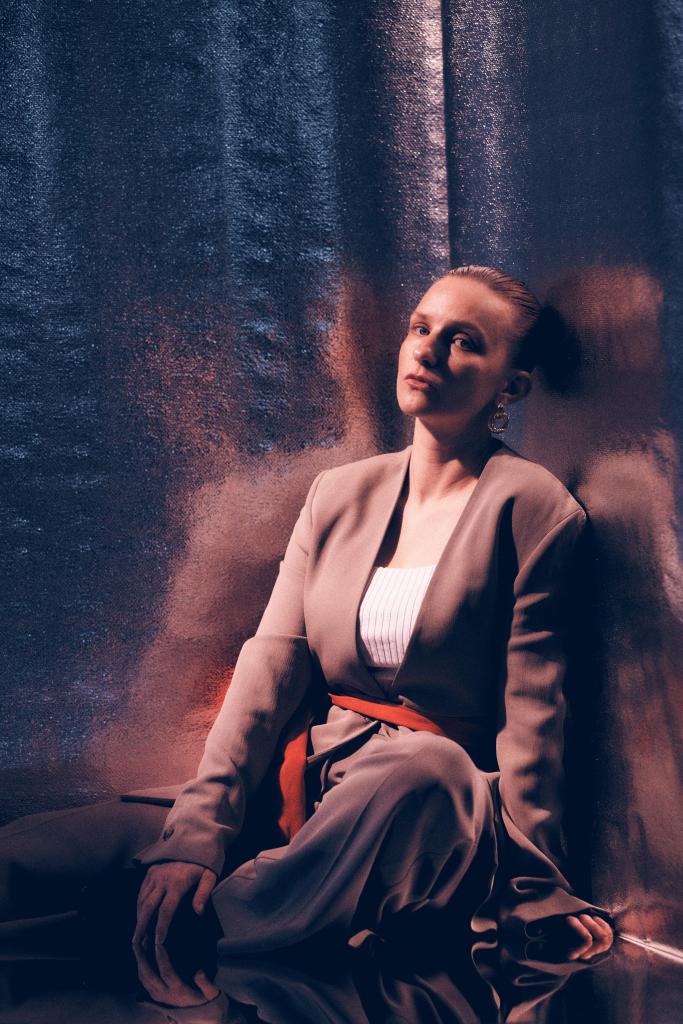
Suit Samsoe Samsoe / Top Sunspel / Scarf (worn as belt) Cenci Vintage / Boots Dear Frances
When you prepare for roles set in different time periods, do you ever feel shocked by the things women had to endure?
Yeah. I was born in 1986, and this was happening in 1956 or 1957 – just 30 years earlier. That’s not a long time. The bravery of women like Annie was incredible, and the limitations they faced were huge. In some ways, things are still moving backwards.
The fabulous actress Amy Lou Wood recently she said she manifested her role in The White Lotus because she loved the series so much. Is there a show you dream of being on?
Oh God, there are so many! But I’ll give you three. I just watched A Thousand Blows, which is brilliant. I’d love to wear a fancy dress and throw some punches. It stars Stephen Graham, Erin Doherty and Hannah Walters—both amazing actresses. Ashley Walters directed some of it. It’s a real family gig.
So it should be easy for you to get in there!
I’ll try! I just want a posh frock and some action scenes. I’d also love to be in Severance – absolute genius. And I just watched the latest episode of The White Lotus. I’m a massive fan of Aimee Lou Wood. Her performance in Toxic Town with Jodie Whittaker is incredible. There are so many brilliant actresses smashing it right now. When one of us rises, we all do.