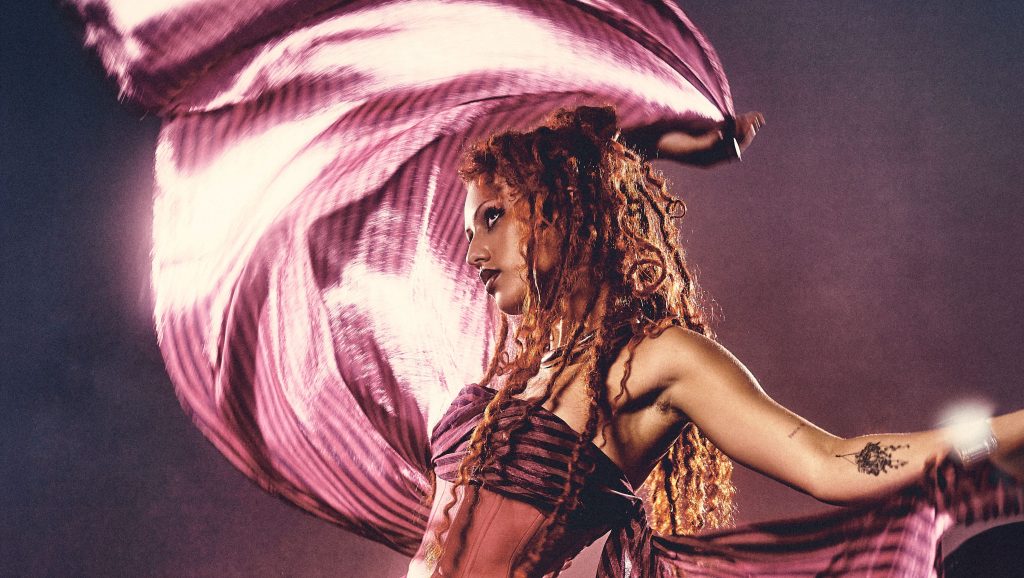
We all think we know the story of Shakespeare’s classic tragedy Romeo and Juliet. After all, it’s been knocking around for over 400 years and has been staged and filmed countless times. Depending on when and where you grew up, there’s a Romeo and Juliet for every generation – whether it’s the dusty old 1968 film version starring Olivia Hussey and Leonard Whiting, Baz Luhrmann’s groundbreaking 1996 adaptation with Claire Danes and Leonardo DiCaprio, or the more recent Broadway production featuring the West End’s current Evita, Rachel Zegler and Heartstopper’s own Kit Connor.
If you haven’t yet experienced the rollercoaster journey of this infamous love story, now’s your chance to catch a fresh and compelling take at The Globe Theatre, the very same theatre (albeit rebuilt on its original site) where Shakespeare once staged his plays.
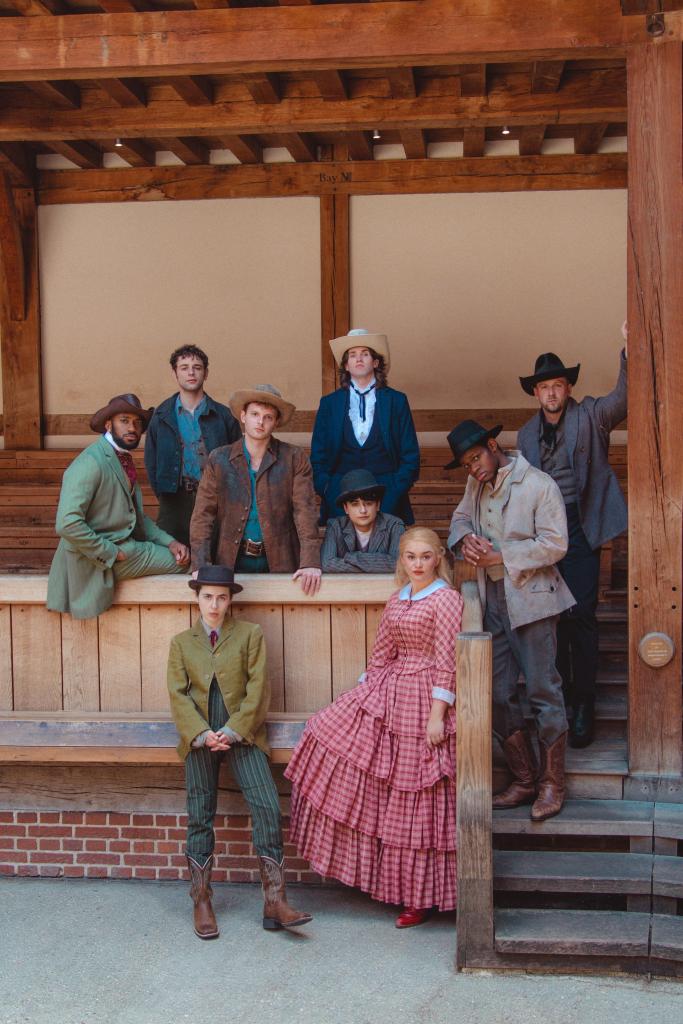
This time around, director Sean Holmes has shaken things up by setting the action in the Wild West, where the Montagues and Capulets are now gun-toting rival families. But don’t expect the actors to deliver Shakespeare’s lines in deep southern drawls. Instead, Holmes has encouraged his young cast to embrace their natural accents, lending a contemporary and authentic voice to the classic text.
PHOTOGRAPHY
Jack Alexander
SET & COSTUME DESIGN
Paul Wills
WARDROBE
Sofia Makkonen and Sophie Scott
WIGS, HAIR & MAKE-UP
Gilly Church, Missy Brazier and Zoe Iezekiel
STARRING
Rawaed Asde as Romeo, Lola Shalam as Juliet, Michael Elcock as Mercutio, Calum Callaghan as Tybalt, Roman Asde as Benvolio, Joe Reynolds as Paris, Niamh James as Abram, David Olaniregun as Gregory, Josh Gordon as Sampson
VERY SPECIAL THANKS
Shakespeare’s Globe Theatre,
Alice Rickett
Since opening at the start of the summer, the open-air production has played to packed houses in all weathers, with audiences swept away by the energy and emotion of a cast filled with fresh talent, many of whom have made their professional stage debuts.
Halfway through the season, we caught up with some of the cast – Rawaed Asde (Romeo), Lola Shalam (Juliet), Joe Reynolds (Paris), Michael Elcock (Mercutio), Calum Callahan (Tybalt), Niamh James (Abram), David Olaniregun (Gregory), Josh Gordon (Sampson), and Roman Asde (Benvolio) – to chat about taking on the Bard, treading the boards at the iconic Globe, and what it feels like to step into the shoes of such legendary characters.
For a lot of people, Shakespeare can be hard to penetrate, especially when you’re a kid. What’s your relationship with the old Bard?
RAWAED: When I was at school, it was insufferable. I didn’t understand what was going on. There were cool moments, like the witches in Macbeth, but then it withers into underwhelming readings where no one knows what’s happening. The first time I really took it on was for drama school auditions. That’s when I picked a speech. Oddly enough, it was the balcony speech.
LOLA: You didn’t… so did I!
So you were destined to be star-crossed lovers. Aww.
RAWAED: I was excited, because I was going to do it in my voice, which was probably audacious at the time, I mean I was 17 and choosing that speech. It wasn’t great though. However, at drama school I learnt so much. And now I’m older, I connect more to history and how fascinating it is and how poignant fresh and elementary Shakespeare is, in his use of love and fear and all of these things.
LOLA: I hated Shakespeare at school. But I got excited about it when a fun English teacher I had, showed us the film version before we read it. She played Young Hearts Run Free from the film and danced around the room full of mortified 13-year-olds. Then, she brought us along here to The Globe on a school trip when I was 13 or 14 to watch The Merchant of Venice. After that, back in the classroom, it started to click: “Oh, I saw that, it makes a bit more sense.” But I have to admit I’ve always felt like Shakespeare wasn’t for me. There’s a whole culture that pushes the idea that Shakespeare’s only for a certain group. It wasn’t until this job, really, that I was like: ‘Oh, I know what she’s saying. I know what she means.’ Having that sense of ownership, ‘I know what she means,’ from 400 years ago, that felt really powerful.
JOSH: This will make me sound like a massive geek, but I’ve always loved Shakespeare. I remember doing sonnets in Year 8 and just falling in love with the language. For me, the scale of the language reflects the scale of the passion in the stories. You’ve got kings losing kingdoms, people dying for love, the stakes are always enormous. And I think if you tried to tell those stories in modern English, it might sound odd. But with Shakespeare’s poetry, the beauty, the imagery, it works.


Roman Asde as Benvolio, Calum Callaghan as Tybalt, Michael Elcock as Mercutio
NIAMH: I enjoyed studying Shakespeare at GCSE and A-level. I did Twelfth Night for A-level and was obsessed with it. But when I got to drama school, I thought it was bit naff. I didn’t really connect with Shakespeare anymore. Even though I had good teachers, I felt like I had other passions. But since graduating, I knew I wanted to do a Shakespeare, because I knew it would push me as an actor as you have to fucking work. It doesn’t come naturally to anyone. But this play – and this being here at The Globe – completely made me fall in love with Shakespeare again. I’m so in awe of some of the actors in our cast, how they’ve taken the language apart and found so much humour in it.
JOSH: Having now performed here at this theatre I think I’ll approach Shakespeare differently going forward. I feel like I understand it more now – not just what he wrote, but why he might have written it the way he did, and how it was meant to be performed. You discover, there are bits of a massive monologue that aren’t about convincing the person in the scene, they’re about convincing the crowd, or even yourself. And I think that’s really changed my perspective on how I look at it.
DAVID: Shakespeare is taught quite vigorously in schools, but once you get past the barrier of just trying to understand what’s going on and you get into the mindset that Shakespeare’s plays are to be performed, not just read, it unlocks so much more. My love for Shakespeare has definitely deepened over time.
CALUM: I always found Shakespeare really daunting in school. I think I saw one production during secondary school, but it didn’t feel accessible. I didn’t really know what was going on. I couldn’t follow the story, I felt detached. But working here, I’ve realised how important it is that most actors perform in their natural voice and accent. That makes it more accessible, especially for school groups from London. When they hear people who sound like them, it puts them at ease. It makes them feel like they can follow along.
DAVID: I knew the play well. It’s one of my favourite Shakespeare plays. I absolutely adore it. I even have a voice note on my phone from last year, telling a friend how much I love Romeo and Juliet and how I’d love to be in it. Fast-forward a year, and now I’m here. It’s honestly a dream come true.
JOSH: I did an amateur production when I was 18, playing Mercutio. It wasn’t very good! When I started rehearsals for this, I realised I didn’t know the play as well as I thought I did. Working with Sean the director, I realised very quickly that what I thought I knew wasn’t all that insightful. Now, I feel like I really understand the play.
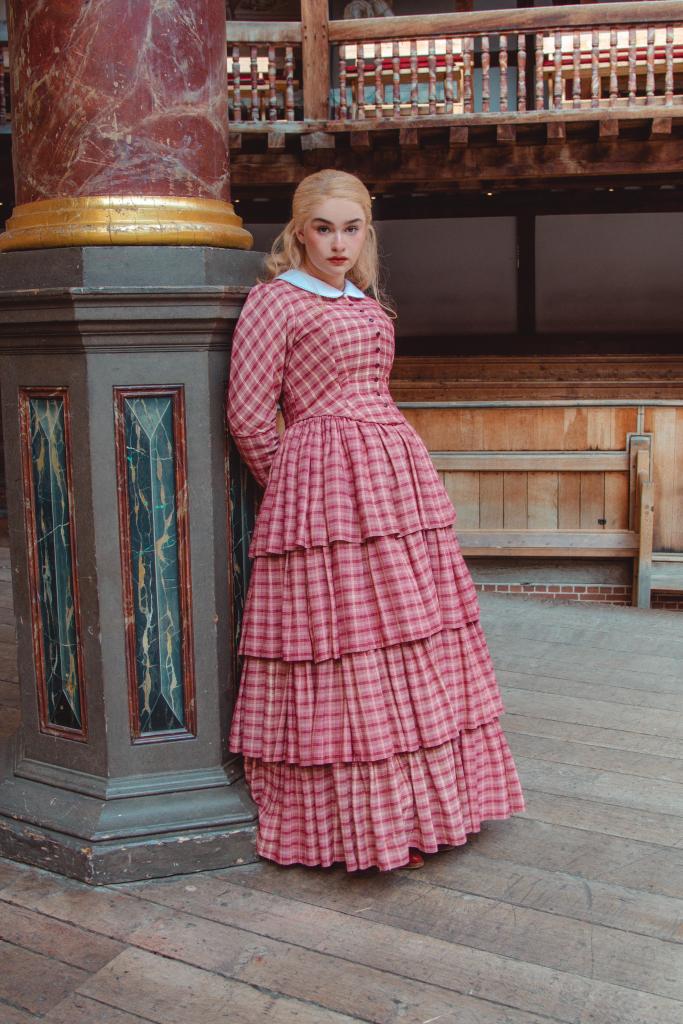
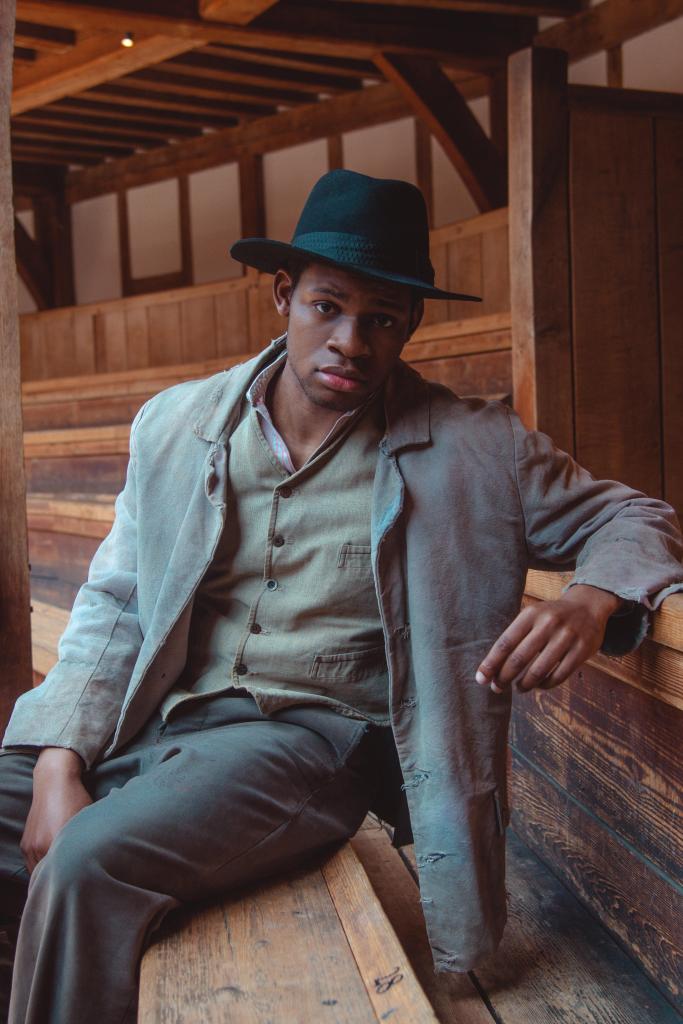
Setting the play in the Wild West certainly helps set the Shakespearean language in a more familiar, more captivating environment for the audience.
JOE: When I found out it was going to be a Western, I was thrilled. The funny thing is, even before I found out about the theme, I arrived at my audition in flares and boots. I was ready to start learning a Southern American accent… but then Sean told me he wanted me to use my natural Welsh accent. I was thrilled even moreso. I love using my accent for heightened text, it sounds great. And especially for Paris, who’s usually played really RP and posh. Having a regional, working-class voice for him felt special. And it wasn’t even for effect, it’s not like all the outsiders are Celtic. I just am Welsh, and everyone’s using their natural voices.
LOLA: Most people still unconsciously view Shakespeare plays as a bit formal and unfeeling and all about articulation and vocabulary. The Wild West setting strips that away a little. It gives us permission to lose the rules and structures. It’s like a gateway. It’s closer in memory than some abstract “authentic” Elizabethan version, which is hard to imagine anyway.
DAVID: When I auditioned, the casting director, Becky Paris, explained to me what the setting was and I was shocked to discover no one had done it before. It just fits so well. It’s a dangerous world, it’s volatile. Things escalate fast, someone pulls a gun, someone retaliates, and suddenly everyone’s in chaos. The themes of toxic masculinity and performative violence? They absolutely belong in that kind of world.
NIAMH: And the way characters flip on each other, suddenly threatening to kill themselves, dramatically changing their minds, that level of high stake, it makes total sense in the Wild West. One wrong move, and you’re dead. That level of tension works perfectly for this story. It just makes sense in a way that it might not in other settings.

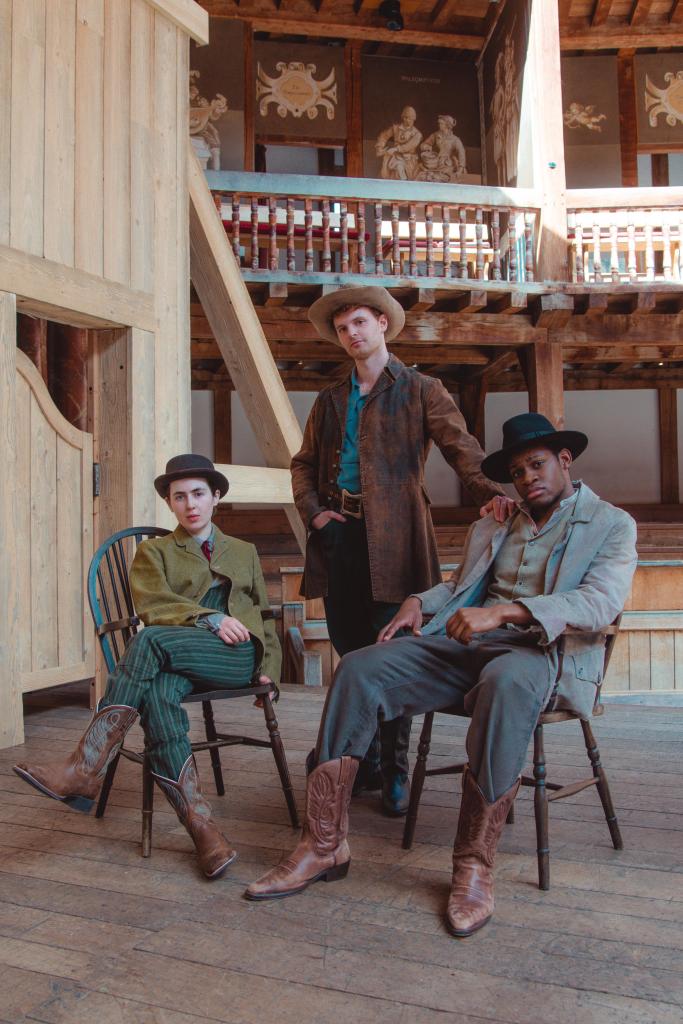
Josh Gordon as Sampson, David Olaniregun as Gregory, Niamh James as Abram
Are there any themes or moments in the play that personally resonate with you, where you think, “Yeah, I relate to that”?
JOSH: For me, it’s Juliet on the balcony scene. The way she second-guesses herself, “Should I have been more distant?” or “This is all too fast, too rash”. I love that part. It’s so relatable. You could drop that conversation straight into today, and it’s basically someone texting a friend: “Oh no, I double-texted. I’ve said too much!” It’s beautifully written, but it captures something so ordinary and real. Even though it’s dramatic, it never feels overblown. That’s the moment I connect with the most.
What themes or storylines of Romeo and Juliet feel especially relevant now?
JOSH: If you boiled it down, the play is about masculinity, especially masculine pride and ego, and the inability to back down. And it’s also about two young people falling in love – fast and intensely – and how exciting and terrifying that is. That’s exactly the world we live in now. Shakespeare always writes so personally, even when the scale is huge. That’s one of the reasons his work stands the test of time. He places people into extreme situations and writes them in ways we still relate to now. So even if it’s a play that’s 450 years old and set in the 1800s, you can see yourself in it. You understand the emotions, because they’re universal.
Playing these iconic roles must feel like a privilege, as you’re taking on the baton from other legendary actors.
RAWAED: It’s like the deepest honour I could possibly get as a young actor, to play this amazing character, and to do it on this stage. It’s like going to a museum and seeing a painting you want to be part of – now we are part of it. We get to speak these words. For me especially, I’m 24 now, there was this point before I got the part where I was thinking about age. I’m not quite a kid anymore, I’m becoming an adult so those young roles are starting to fade away for me. So to be given this part, right at this moment in my life is huge. With characters like Macbeth, you can play them older. They’re not going anywhere. But with young roles like Romeo, there’s a limited window where it works, and after that, it starts to feel a bit off. So to be given it now, I was truly, truly grateful.


LOLA: It’s crazy, bizarre to be playing Juliet. One of the most famous characters ever written. It’s a total, total honour. And especially to be doing it here. At The Globe. There’s something surreal about just walking on these floorboards, as I visited the theatre all those years ago as a kid. When I dug deep into the part, I discovered there were so many commonalities, things that have really surprised me. This young woman, Juliet, she’s defiant and bold. She’s a deep thinker. She’s a romantic.
Is that how you think Shakespeare saw her or is that your own takeaway?
LOLA: I think that is the character. I think that’s how she’s written. But it took a lot of debunking, figuring out what my own perception of her was, and then thinking about how the past 400 years have shaped that perception. You know, how our understanding of young women has been framed. And then, actually reading it again, with a bit of distance from all that, I was like, that was me when I first contemplated sex, or when I started noticing that maybe my parents weren’t right about everything. That disillusionment, and the heartbreak that comes with it. So connecting to those moments, it feels like, even though the play is utterly mad – I mean, it takes place over just four days – it’s also really empowering. Because there he was articulating something I did feel when I was 13 or 14. That inner turmoil no one seemed to understand. So it’s kind of beautiful.
RAWAED: I wanted to break away from all the preconceptions about these characters. I think the beauty comes from surrendering your own voice and body to the role and letting the complexity emerge from that. It’s about committing to it, trusting the words, and trusting the play. It’s just such a beautiful world to lose yourself in. And at this stage of my career, right at the beginning, I’m learning so much from it. It’s teaching me everything.
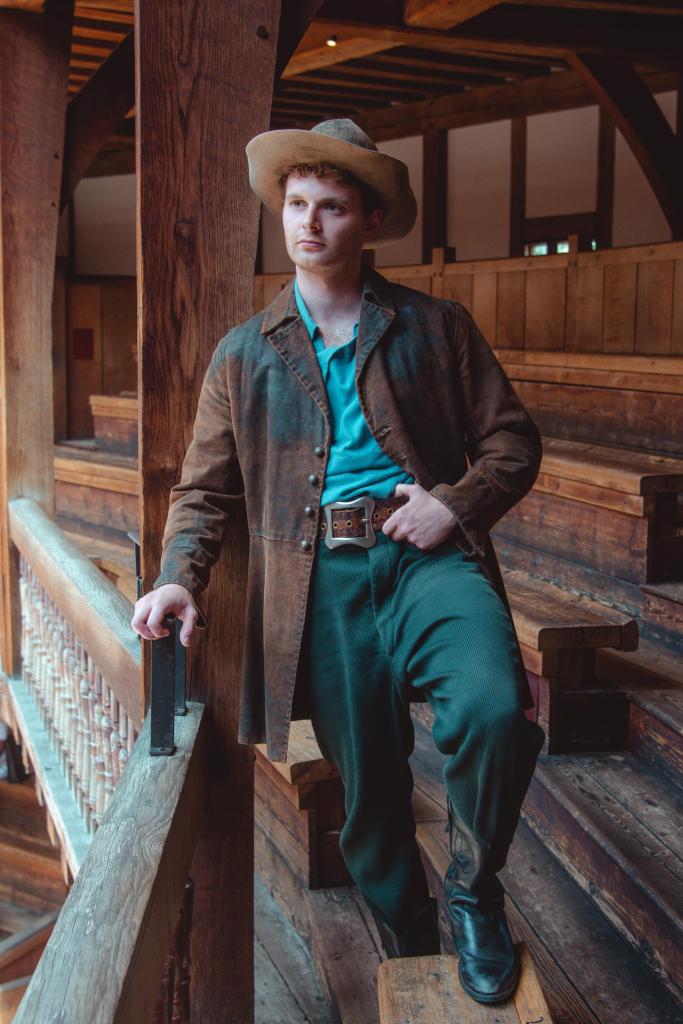

For many of you, this is your professional stage debut… To perform at the Globe doing Shakespeare must be a daunting experience.
RAWAED: It’s my actual professional stage debut, so it’s a huge thing for me. And you can’t ask for a better start than this. I’m learning so much. Romeo’s an interesting protagonist, he sort of fades away at points in the play. The audience can lose sight of him because of the decisions he’s making. but you have to stay with it, you have to trust it, commit to it, and keep connecting with the audience. You’re there with them, interacting, holding them.
ROMAN: This is my second ‘proper’ job after I graduated last year from LAMDA! In terms of Shakespeare, I enjoyed it at school intellectually, but I never thought I’d be good at it. At drama school I did some and thought, “I’m probably never going to do this.” I found it daunting. But we had great text support for this. Someone told me Shakespeare is the closest thing you’ll do to a musical in straight acting, because of the rhythm, the rhyme, the meter, the heightened language. So I approached it logistically. Once I’d dissected the text like a detective, then I could be free in my choices, because I fully understood it. If you don’t understand what you’re saying, then none of it is worth anything.
CALUM: It’s my first time doing Romeo and Juliet, but my fourth Shakespeare show here at The Globe, my third summer in a row, which is just an amazing place to work. I didn’t go to drama school. I started working when I was very young, when I was seven. So I’ve actually been working at a professional level for 32 years, which is mental to me because I don’t even feel that old, but I am. I’ve been fortunate enough to make a living from it. Like Roman was saying, when you’re working class in this industry, it’s not, unfortunately, designed for, in my opinion, working class actors to succeed. Because you can’t sustain yourself on theatre wages. So therefore, when I’m not doing shows here, like, I’m doing normal jobs, I’m driving a van or laying floors or whatever. It’s just like that, that drive. And especially like working in places like this and in companies like this and telling these stories and getting the reactions that we’ve been getting, it makes everything worth it. There’s nothing else I would want to do.
ROMAN: I didn’t really have access to theatre until I was like 15, 16. I think my influence is mainly my brother, Rawaed. One of the luxuries of living in London is that there’s so many free programmes for young people to do, especially who come from working class backgrounds or who don’t have access to certain drama institutions that you have to pay privately. So, you know, we did our Meet the Young Company then I was lucky to do RADA Young Company and Theatre Peckham’s Young Company. And I think it was just being in those spaces and going, ‘Oh, people actually believe in what I’m doing, and trust that I’m decent enough.’


Lola Shalam as Juliet, Rawaed Asde as Romeo, Joe Reynolds as Paris
The play famously ends in tragedy. Do audiences still get surprised by the sad conclusion?
CALUM: What I feel tends to happen with some audience members, is that because it’s called Romeo and Juliet, your brain automatically clings to the romance. That becomes the overriding memory: “Oh, it’s about love.” But actually, there’s so much more: tragedy, death, violence. When I came on board, because I joined rehearsals quite late, with just two weeks to go, I started by watching a run-through during the end of my first week. And I remember thinking, “Wow, there’s so much more going on than just a love story.” I found Sean’s production – and what this ensemble has done with it – made it all feel very human. I was sitting there, watching it, really buying into these people. Whether you’re meant to love or hate them, I felt for all the characters.
ROMAN: I mean, for some people, the tragedy is all they remember, they know it’s a tragedy and that they die at the end. For others, it’s all about the romance, like Calum said. So you never really know what audiences are coming in with. Some have studied it for years; some have no clue. What’s exciting is that every production gives the audience a different journey. And the characters themselves don’t know it’s a tragedy. So we were directed to play it almost like a comedy, until it turns. That adds to the shock factor in our version. Like when the shit hits the fan, it’s like rah… it’s not doom and gloom from the start. When things take a dark turn, it really hits. That can be a trap with famous texts, there are so many versions and references out there that people can rush to the ending in their minds before the show’s even begun. So it’s fun to see the audience react to the story as it unfolds: Mercutio’s death, Tybalt’s death, the lovers’ deaths, even the balcony scene. I hope what we’re doing keeps people on their toes.
LOLA: I think the way Sean has directed that final tomb scene… I’ve always felt, at the end of Romeo and Juliet, you’re sitting there going, “Right, he’s gonna wake up any minute now and cry… and then she’s gonna wake up.” Do you know what I mean? But Sean has managed to access something deeper, without changing a single word of the text. We’re seeing it through their eyes. For them, ending their lives is their best option. And I don’t think that’s so far from reality when you’re in that headspace. Sometimes people do feel that way. It’s heartbreaking. And yes, there’ve definitely been a few teary eyes in the house, which feels right. You’re watching someone’s dreams unravel. And I really don’t think this is just a story about star-crossed lovers, or about fate. I think it’s about two young people who are not compatible with the society they live in. And that’s why it ends the way it does. It’s their parents’ propaganda, their inherited values, that make it so this young woman can’t be sexually enlightened, or active, or desired, without compromising her entire life. That, to me, is the story. And that’s why it feels so powerful.

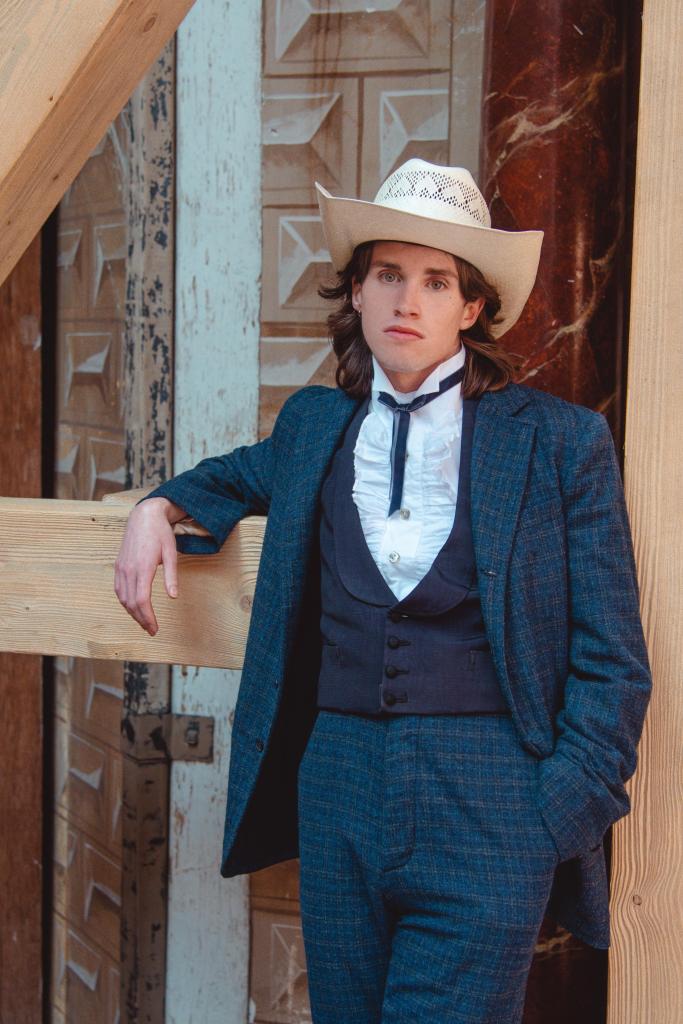
The Globe is such a wonderful and very different kind of theatre to be performing in, it’s all in natural light.
MICHAEL: I remember the first preview; I was so nervous. I didn’t want anyone to talk to me or look me in the eye. I didn’t even want to be there. That moment when the saloon doors open and you see 1,400 pairs of eyes staring at you, it’s terrifying. In most theatres, you don’t even see the first row. But here, it’s different. You start to feel something. You connect. It becomes almost… seductive. It’s almost like you’re a rock star. It’s like Ozzy Osbourne, when he strums the guitar, the crowd goes wild. Sometimes with Mercutio, I’ll make a move and the whole upper gallery erupts. It’s got a concert vibe. That can be seductive. But that can be dangerous too, it can pull you away from the world of the play. You start responding too much to the audience. You start playing to them instead of with them. And because they’re right there in front of you, they feel empowered to react, laugh, cheer, even shout out.
CALUM: One of the magical things about this place is performing in extreme weather, both heat and rain. The audience’s endurance is amazing. They get really hot, or they get soaked, but they stay. I’ve been on stage during thunderstorms. People just pull up their hoods and keep watching. It’s such a unique experience. When I first worked here, I assumed, because tickets for the yard are so cheap, people would just leave if it rained. But they don’t. They stick it out. And in those moments, when I’m looking people in the eye, it gives me this real sense of gratitude. I’m giving them everything I’ve got to entertain them. And they’re doing their part by staying, whether they’re getting sunburned or drenched. That kind of matched energy between cast and audience creates something really special. By the time we do our bows, that applause—it never gets old. That sound of people who’ve genuinely had a brilliant time, it gives you a real buzz.
DAVID: It’s an experience like no other. As actors, we’re always told to be comfortable being vulnerable, and this space is a great training ground for that. It’s really just you and the audience. There’s no hiding. They see you, you see them. You’re in it together. And it’s very exposing. But there’s also something freeing about it, especially for young performers. That kind of experience is a gift we’ll take with us for the rest of our careers.

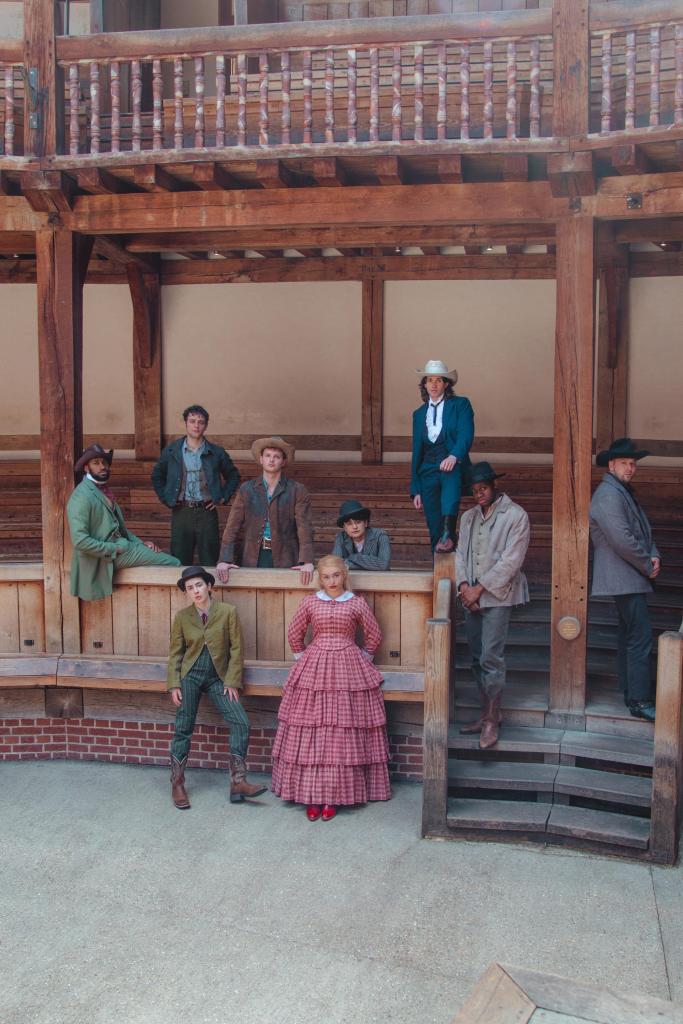
Romeo and Juliet runs at The Globe until Saturday 2nd August. Tickets start at just £10 and can be booked here.