When Millie Gibson approaches a new project, she does so from a place of total immersion. So far in her career, the 21-year-old has primarily played characters who are around the same age as her. As she told me during our conversation, this allows her to access the inner workings of their minds with an ingrained understanding of what makes each of them tick. Whether it’s recognising herself in Kelly’s experimental era on Coronation Street, or finding a sense of camaraderie with Ruby as they both embarked on a new adventure on Doctor Who, Millie has been able to fully transform into every character without losing herself in the process of doing so.
This talent of hers is especially on display in The Forsytes, where she plays Irene Heron. Millie learned the basics of ballet in preparation, and she also tapped into her own past experiences to better embody the reserved 19-year-old she plays on screen. “I’ve been fortunate to always play my own age, more or less, and haven’t had to act down, so I did express my own experiences through [The Forsytes],” she said. Irene, through most of her initial appearances, is something akin to a budding rose—tightly wound but ready to bloom when the moment’s right.
PHOTOGRAPHY
Jack Alexander
FASHION
Ahmad Alek
HAIR
Liam Curran using
Remi Cachet & Amika Haircare
MAKE-UP
Louise Hall using
TATCHA and Charlotte Tilbury
She, like Millie, approaches the world with a sense of cautious optimism, which is just one more way the rising actress finds herself reflected in her roles.
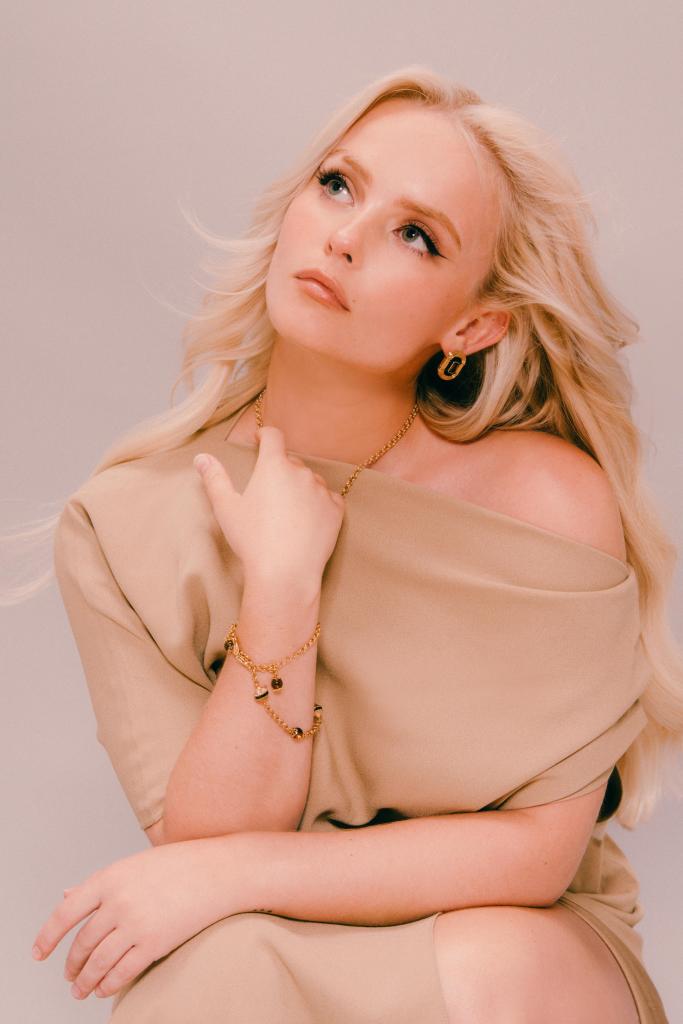
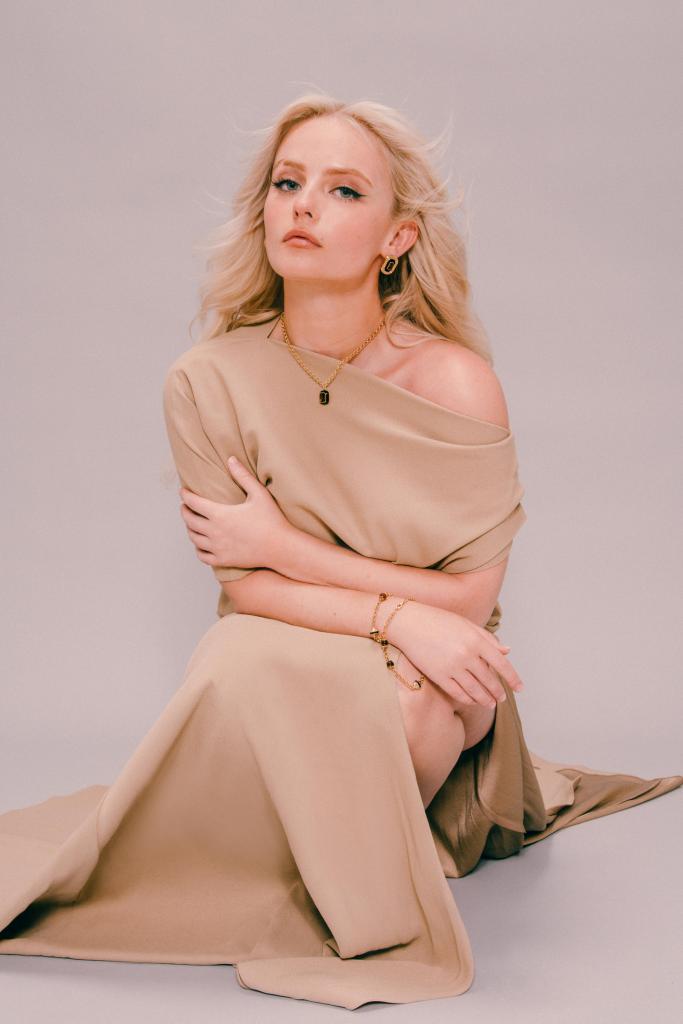
Full look Synopsis Collective / Shoes Malone Soulier / Jewellery Retro Chic
In a previous interview, you spoke about how you were interested in pursuing a biographical role that required research prior to filming. In The Forsytes, you play Irene, a character who is the fictionalized version of author John Galsworthy’s wife, Ada. Given that you had both the novels and real historical context to pull from as you prepared for this, which research component did you enjoy the most and which did you find most beneficial in terms of shaping how you wanted to portray Irene?
Oh, that is such a nice question. It totally scratched an itch. I really just wanted to delve into something that had a skillset that I had to adapt, or something that really challenged me in a way. I picked up the books initially when I got the part, but Debbie Horsfield, the writer, told me to stop reading the books because even though they’re based on the John Galsworthy novels, those are very male-led and male-focused. Whereas Debbie reintroduced it in a more female-empowered way, which is so beautiful. We’ve got so many strong lead female actors in there, like Tuppence Middleton and Eleanor Tomlinson, and they’re such powerhouses. Maggie really paved the way for these beautiful female characters to have more oomph, and more purpose and drive. On that side of researching, I could add my own flair to it, which was so nice. However, in this version, Irene is a ballet dancer, so you see where I’m going with this. [Both laugh].
So, I had to learn ballet, which is such a beautiful thing about this job. The skills that you can learn from the best choreographers are just so accessible and so cool. It’s something that you’d never get on any other job, and I’m really grateful for that. Ballerinas are athletes, though. I kept being like, “Oh, I’m going to boss this,” and then I’d be shown how to actually do the move and that mindset would change. I had an incredible double who did all of my on-point shots, Eloise Shepherd Taylor, and she was so talented. I learned all of the upper body dance shots, and in one scene, I actually got to work with the Royal Academy of Ballet, and those dancers are so beautiful. I went to one rehearsal to dance with them and they were remarkable. I think that itch was definitely scratched by learning ballet. I mean, it’s just the wildest thing to learn.
Has that sparked an interest in continuing to practice ballet?
Yeah, I’d love to. Sammy Murray was my choreographer, and she unlocked a new passion within me. I was really excited every time I had a lesson with her because it made me feel like I was connecting with the character more, because Irene’s drive and biggest goal is to be a ballerina at the ballet in Paris. Every time I did a lesson, I could understand why you’d get so passionate and fall in love with it so much. And I actually got a tattoo of a ballerina slipper on my ankle.
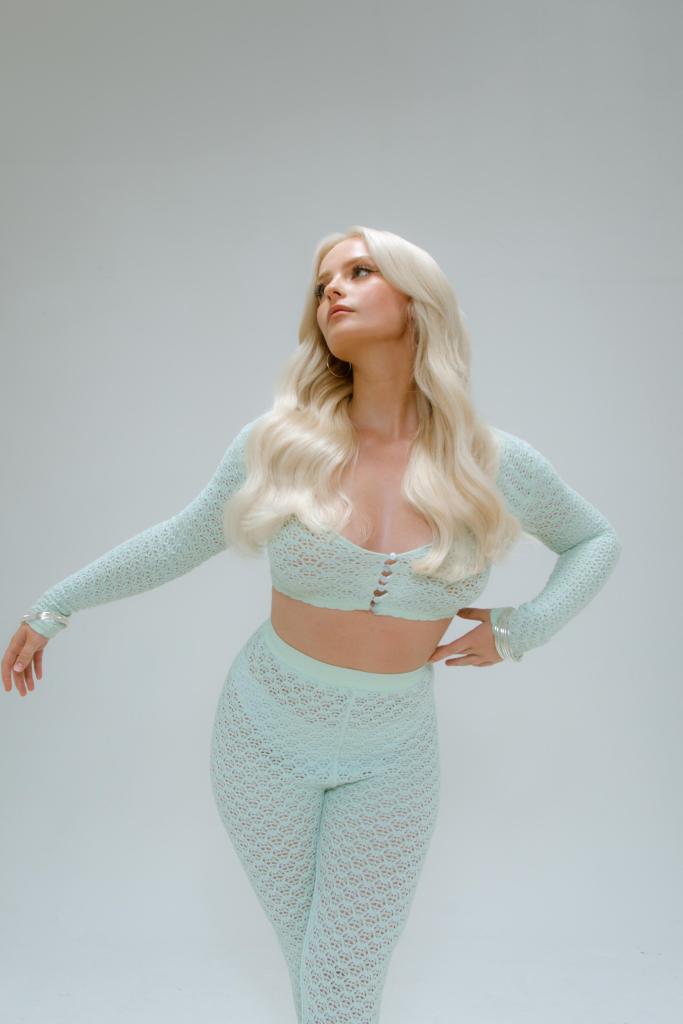
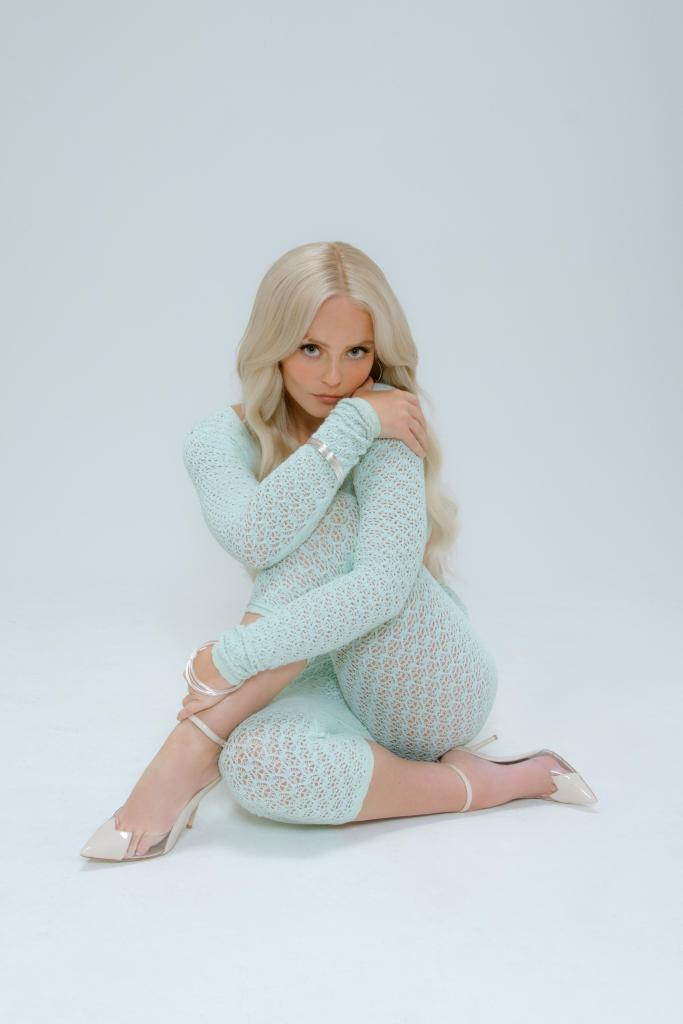
Full look Samanta Virginio / Shoes Malone Souliers
That’s so beautiful! You’ve learned the basics, which is more than most people do, and it’s lovely that you’ve been afforded this opportunity to try something you ended up really enjoying. In terms of your character—Irene is quite shy at the beginning of the show, and I feel like you’ve done such a great job of physically showcasing that shyness with a closed off element to your body language. The only time Irene seems truly open in the first episode is when she’s dancing. Was that a conscious decision on your part to have the way she carries herself reflect the more subdued aspects of her personality?
Thank you for saying that. In all the ballet scenes, you can’t help but let all that pent up tension out, which is common for people when they’re doing something they’re passionate about. Because a lot of my early scenes in The Forsytes are surrounding the relationship arc with Soames, the shyness definitely comes from Irene’s characteristics. It’s almost that feeling you experience when you have your first crush where you’re a bit shy because he’s so handsome, and you’re like, “I’m fine. Am I fine? Am I red?” So, that plays into it, but I do think she’s closed off and reserved. I’ve been fortunate to always play my own age, more or less, and haven’t had to act down, so I did express my own experiences through that since she’s 19. She’s the daughter of these eccentric bohemian parents, and she’s met this grand, polite man of society, and I think she’s swept off her feet, but in more of a childlike way since it’s her first introduction to love, which also plays quite shy. Thank you so much for noticing that.
Of course. It was so delightful to watch your performance. I loved the scene where Soames comes to the house and Irene thinks he’s there for her stepmother. I was like, “This baby, she just doesn’t understand what’s going on.” [Both laugh].
Fiona Button is so incredible. She’s so funny. Every time I did a scene with her, I was like, “You are the funniest actress I’ve ever worked with.” She steals the show in the first three episodes.
I loved watching that dynamic between your characters. Like when the two of you go to watch Soames play polo and she’s answering his questions when he’s clearly talking to you.
Oh, it’s so good. She’s incredible. Honestly, you’re in for a gorgeous comedic performance from her. You can’t help but love her. She’s kind of an evil stepmother, but you love her despite that. I think that’s how Irene feels about her as well, which was really fun to play.
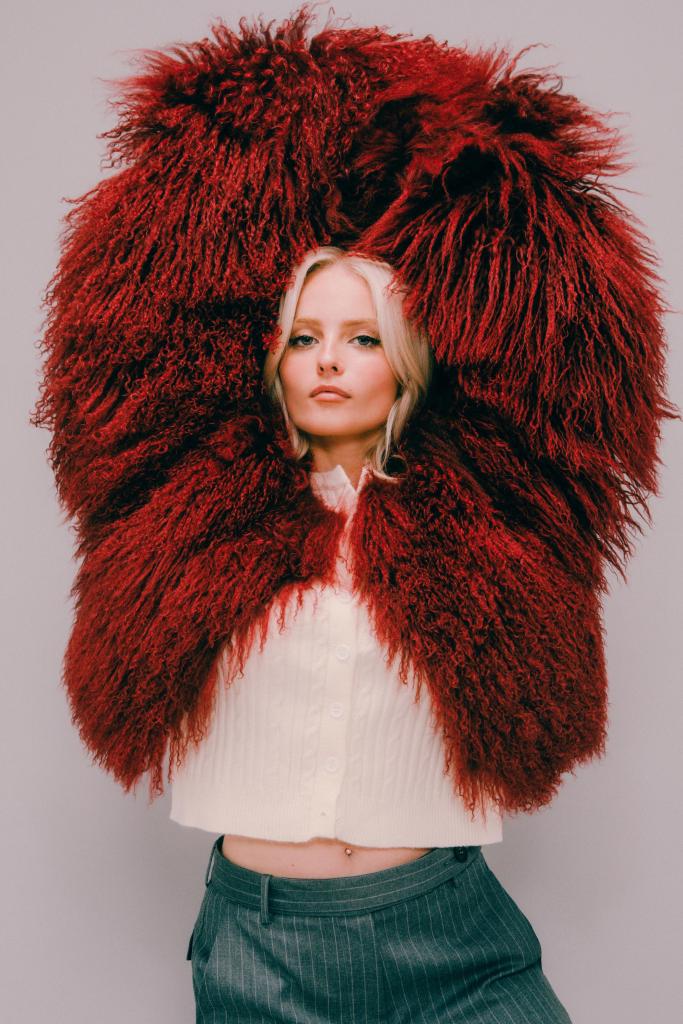
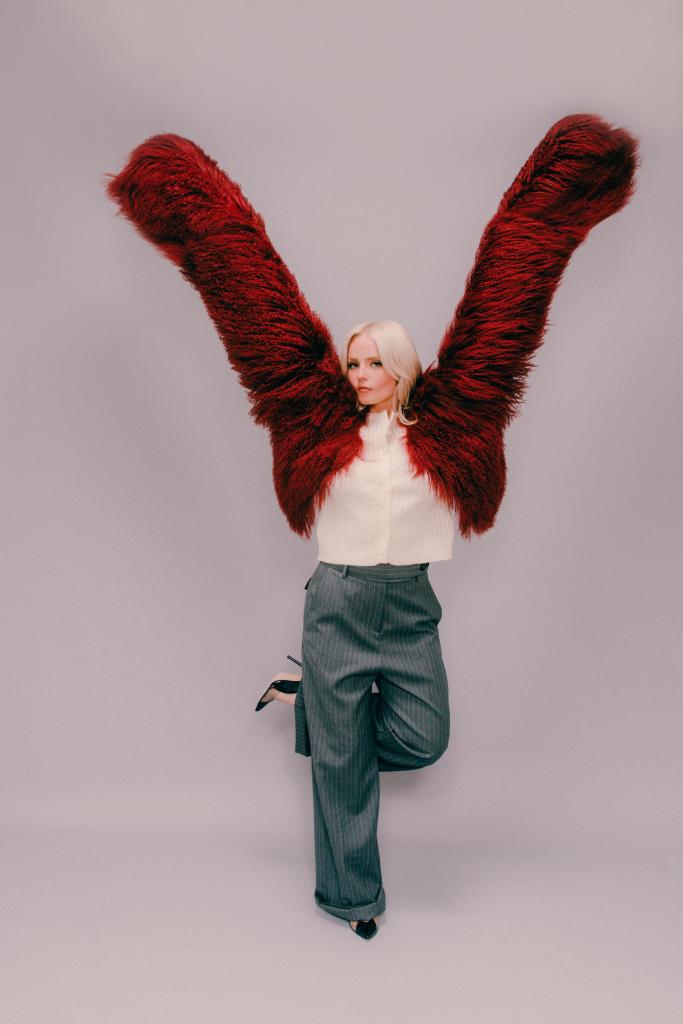
Jacket Kulakovsky / Top Cinta / Trousers Eudon Choi / Shoes Malone Souliers / Jewellery Retro Chic
It sounds like it was such a joyful element to filming the show! Especially given that Irene has such an emotional start. We’re meeting her during a time when, not only is she in mourning, but she’s also trying to navigate how to fulfill her dad’s wish for her to be a ballerina in Paris, how to carry on her mom’s legacy as an artist, and the strange dynamics between herself, her stepmother, and Soames. When you’re approaching a scene where that all starts to bubble to the surface and you’re required to cry on camera, are you solely channeling how your character feels in the moment to elicit that emotion? Or do you blend Irene’s experience with your own personal experiences to portray that grief and confusion?
That’s such a good question. I know so many actors who have said to not use my own experiences. It’s a dangerous path to go down because you could end up going down a bit of a hole for the rest of the day when you still have to work. At the same time, I feel like whatever you do, your body and your brain are two separate things, so your brain knows that it’s not real. Whenever I cry and I’m drawing from the character, my body still goes into a little bit of a panic, like, “Why are we crying? What’s going on?”, so regardless of what you do, it’s not going to be pleasant. But I think for that scene specifically, I was drawing from Irene because Tristan Sturrock, he looked so dead. Bless him. He was right in front of me, and he was doing these gorgeous lines, so it was upsetting. With some other scenes, though, the script will just say something like, “Irene cries.” And it’s like, how do I cry without a prompt like that? When there’s so much dialogue and it’s really empowering, that’s much easier. In those other times when it needs to come in an instant, I do have to draw from something I know will make me cry. It changes in every situation, but I do understand why some actors don’t draw from their own experiences because it can be horrible.
I can only imagine how complicated that must be. I cry at everything all the time.
Oh my God, me too. I’m such an empath, so that does help with the performance, too. Sometimes people are like, “Oh my God, Millie, save it!” And I’m like, “Don’t worry, the tears will keep coming.” [Both laugh]. But yeah, it’s definitely helpful to be able to use that during times where I need to get to that emotional place quite quickly in a scene.
I think it’s good to have things that will make you cry that maybe aren’t personal to you, like a movie, so you can draw from that while still protecting yourself at the same time.
There’s a scene in Laurel and Hardy where the two comedians are dancing together, and that always makes me ball. So, whenever it’s like, “Millie, cry now!” I’m like, “Hold on, let me just pull this up really quick!” It’s so therapeutic when you know you need to cry and you think, “I need something sad to get these emotions out in a healthy way.”
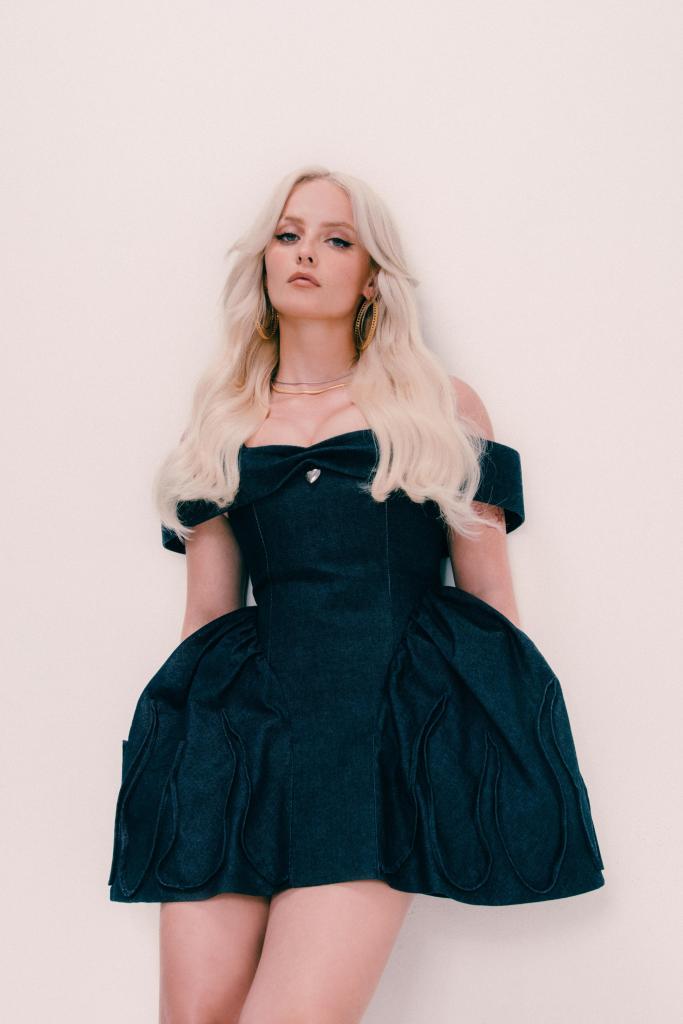
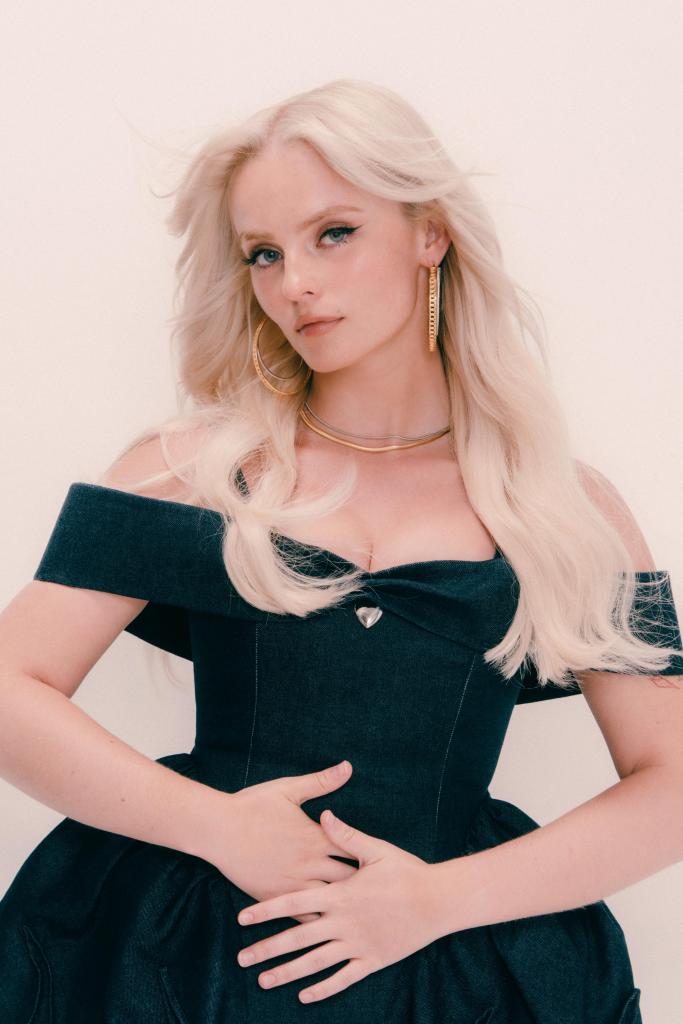
Dress Hisu Park / Shoes Pleiades / Jewellery Retro Chic
I totally get that. And I feel like that must lend well to filming a show like The Forsytes since it has so many different emotional elements to it. It’s also a period drama, which requires elaborate outfits and hairstyles to physically transform yourself to fit into the fictional world around you. Was there a specific element that made you feel most immersed in that time period?
The costumes are an obvious one, but I’m going to say the wig because I look so different in this show. I told my nana I’m in it, and she was like, “Where?!” [Both laugh]. The wig made me feel like Irene, and like no one I’ve ever played before. The accent was not mine, obviously. I just felt like an ethereal being on set because I’ve never felt prettier in a role. The makeup designer, Magi Vaughn, made me feel so pretty. It was great.
It’s funny you mentioned that because when I was watching it, I was like, “That is Millie, right?”
Everyone was telling me that the hair color suited me and that I should dye it. And I kept having to say no because I don’t think my own Nan will know who I am. I think so many actors and actresses say this, but if you have an accent in a project, that helps, but a wig gives you extra support to fully become your character.
Does taking the wig off when you’re done filming help you shift back into feeling like yourself again?
Totally. It’s so great when you can separate yourself. When you’re doing hard scenes in the day as well, it’s so much easier because you can remind yourself, “I’ve just been through an awful travesty but it didn’t really happen to me.” But some days, I was going on a night out with the cast and I’d want to leave the wig on because it was funny. It’s nice to have the separation between the two lives, though, definitely.

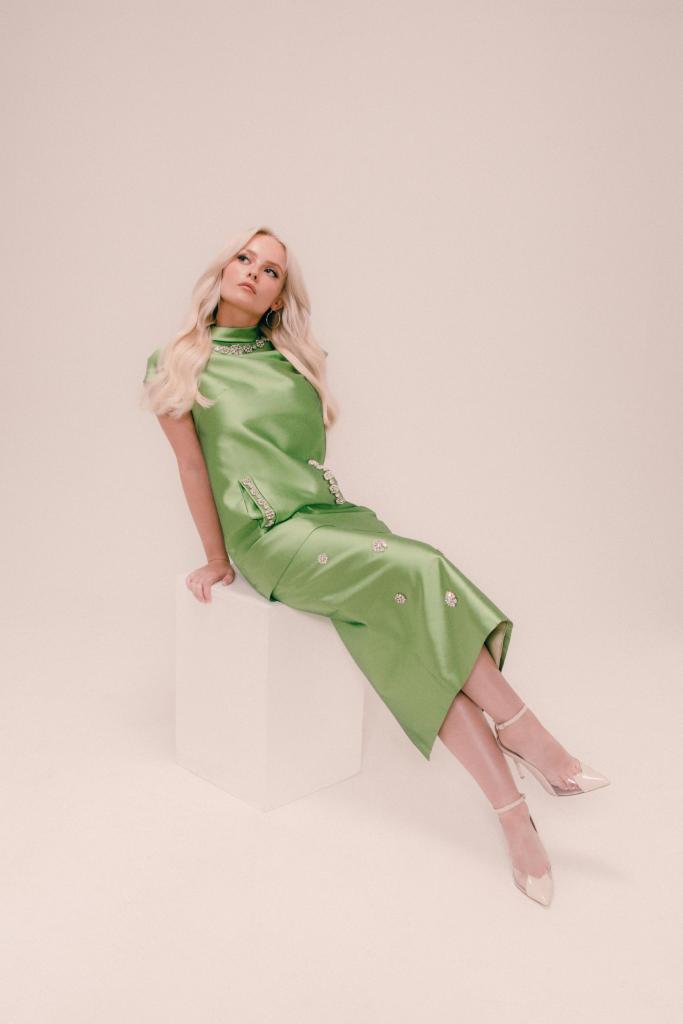
Full look Huishan Zhang / Shoes Malone Souliers
You’re obviously no stranger to approaching roles that will potentially require some degree of longevity to you portraying them, from Coronation Street to Doctor Who and now The Forsytes. Do you feel like you’re inherently drawn to opportunities that present you with a sense of stability? Or is that just how this happened to shake out over time?
I’ve literally got such a streak of being with shows that last over 60 years. And The Forsytes is a new show, but the source material is over 60 years old, so it counts. I think that’s just how it’s happened. Honestly, when I left Coronation Street, my mom and dad were like, “What are you doing?!” and I didn’t think I would get anything for a long time, but then on my last day, my agent rang me and said I had an audition for Doctor Who’s companion. And I thought, “That’ll be a fun one to say that I auditioned for,” because I thought I had no chance of getting it. I did the first audition, which was a self-tape, and then I got a call two weeks later to ask if I could read with Ncuti [Gatwa] and meet Russell [Davies]. And I had this feeling of being like, “I’m never going to be able to watch this show again if I don’t get this part. That’s how bitter I’ll be.” [Laughs]. Thankfully, I got the part, but I think that’s just how my career has turned out so far. I’m excited to see what the next show I’ll be on will be. And if it’s not been on for 60 years, I’ll have broken my record.
You’re like, “I actually specifically took The Forsytes because I knew it was at least in the ballpark of the 60 years I need to maintain for my projects.”
The next thing I could do is James Bond!
Listen, when I was doing research for our interview, I saw a lot of people saying that you’d make a great Bond girl.
Oh my God, can you imagine? I’d call you up and be like, “Sam, guess what?”
I would freak out and be like, “No, you guys don’t understand. We literally talked about this and now it’s happening.”
I’d be insufferable if I was a Bond girl. I would go into every bar and be like, “Pour me a martini now! I’m the Bond girl!” [Both laugh]. They’ll cast me before Bond. It’ll be fine.
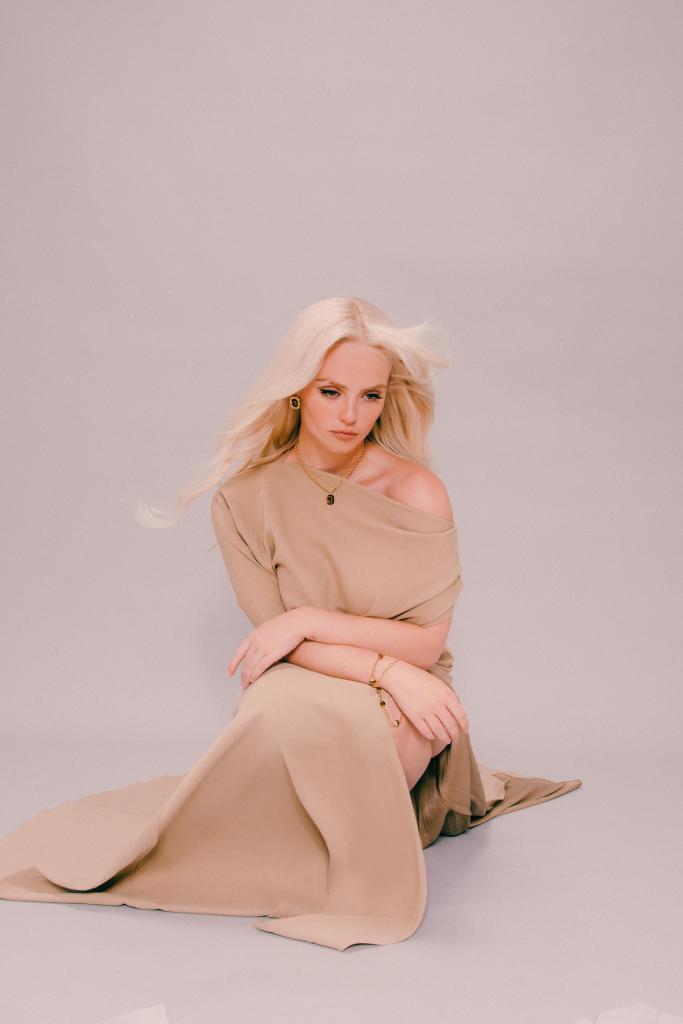
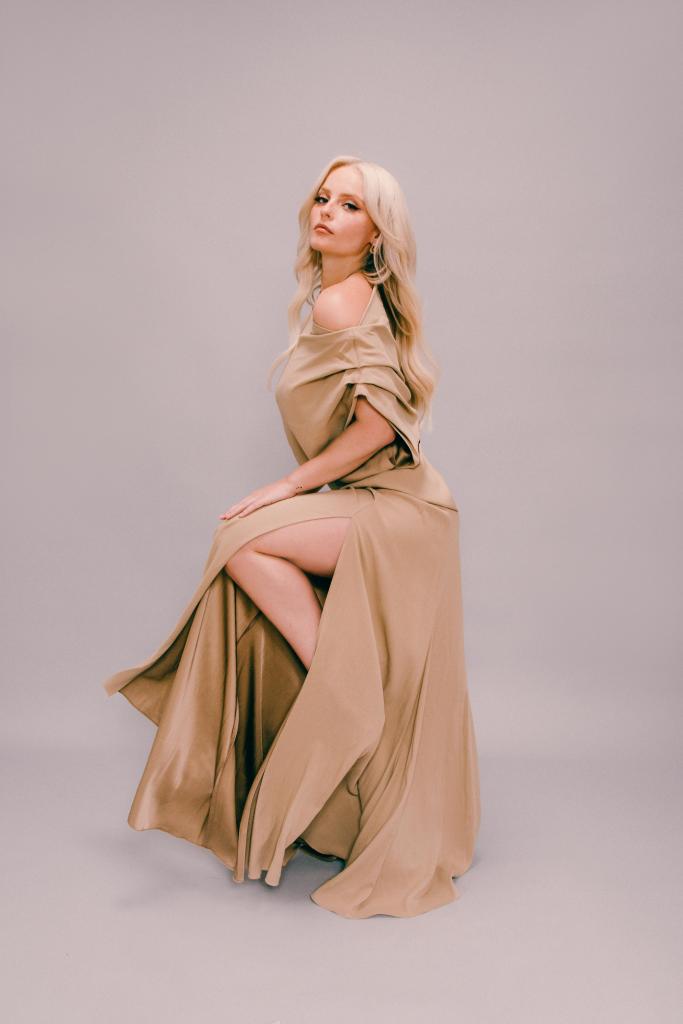
Full look Synopsis Collective / Shoes Malone Souliers / Jewellery Retro Chic
That would be iconic if they cast you as the Bond girl and then had chemistry reads with you to figure out who would be the right fit for James Bond. Women need to be centered in the storyline even when it’s about a man! Speaking of you carrying on the legacies of these different shows, and as you were mentioning being an emotional person, I was curious—so many Doctor Who fans wish that you and Ncuti Gatwa’s time on the series encompassed more seasons. Do you experience a similar grieving process to fans when you move on from a franchise like that or Coronation Street?
I mourn every job. I miss all my friends at Coronation Street. I miss all my friends at Doctor Who. It’s a constant process of letting go of these lives you’ve lived. I remember after filming my first season of Doctor Who, I didn’t see Ncuti for a week afterwards, and it felt really weird even then. It’s almost like you’re renting a life for a little bit, and you get used to it, and then you have to get used to it being different again. Being an actor requires you to constantly go to new environments, and I struggle with change, so in a way it’s good for me because it gets me out of my comfort zone. With Doctor Who, it was slightly different because so many people have passed the baton before me, and then I got to be the companion, and then I got to pass the baton to Varada [Sethu], who was the next companion, and I was so excited for her because that’s what happened to me. It was like meeting a new best friend, and Karen Gillian said it was like that when I was cast. It’s such a beautiful environment to connect to, rather than separate yourself from each and every generation of Doctors. I can imagine for the Doctors that it’s quite hard to pass the keys to the next Doctor. With our companions, I think we all just talk about our experiences, and it’s like dating the same person. [Both laugh]. It was more like we connected rather than mourned, which is a nice thing to be able to say.
I think that’s really beautiful, and all you can hope for sometimes is finding joy in the experience and feeling that sense of it truly being bittersweet. And it’s also something you’re passing on to someone else who will then become their own part of this generational, interconnected thing.
I think as well, it’s not just the role of the companion, it’s the role of Ruby. I wouldn’t want anyone else to have her because Ruby was my character specifically, like how Varada had Belinda and Karen had Amy. For the Doctor, I can imagine it’s a lot harder because they’re all like, “I’m the Doctor. No, I’m the Doctor.” Ruby is definitely a character that will stay with me for the rest of my life.
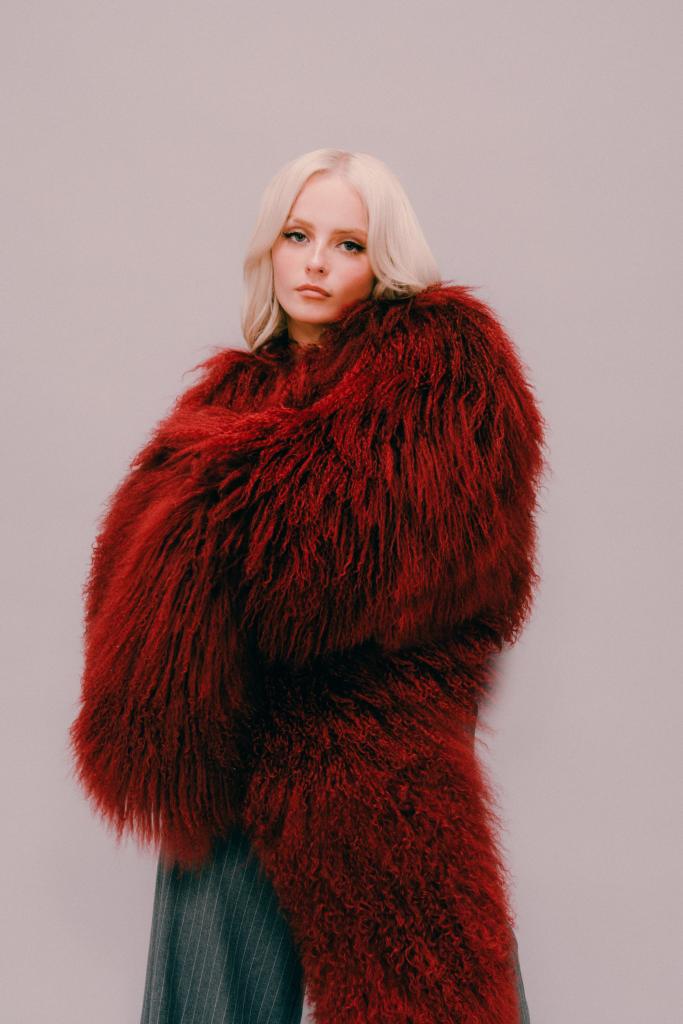

Jacket Kulakovsky / Top Cinta / Trousers Eudon Choi / Jewellery Retro Chic
Speaking of Ruby, you said in a previous interview that you pursue roles that are very distinctive from one another, and that’s clear even looking from her to Kelly to Irene. Despite the obvious differences between them, is there a throughline that connects each of them for you, either in terms of their overlapping qualities or how they made you feel when you were portraying them?
That is such a good question. I think there’s a certain vulnerability within all of them where they love so much, but sometimes don’t get the same love reciprocated, but in many different ways. Kelly’s family basically abandoned her. Ruby’s family basically abandoned her. Actually…I’ve just connected the dots. [Both laugh]. I’m having an epiphany because, in a way, Irene’s family has abandoned her as well. For all three of them, I just want to hold their hand, and I want to be their future self and say, “It’s all going to be okay.” Because I’m always playing my age, I relate to them so much. I remember when I was playing Kelly, I was going through a bit of a chavvy era in my life. With Ruby, I had entered a new job, and Ruby had just entered a new Tardis, and it was very unfamiliar for both of us. And then with Irene, I was still filming season two of Doctor Who, so I was actually late to filming The Forsytes, and everyone had already been filming for a month. So when I came in, I felt very similar to Irene, especially since the scene where Soames introduces her to the family for the first time was actually my first time being on set with everyone.
That’s such a weird parallel moment where you’re like, “Oh, I’m actually also meeting these people for the first time!”
Literally! I’ve been lucky enough to act in a lot of scenes as these characters that are very related to my actual life. So, that makes it nostalgic to watch them back.
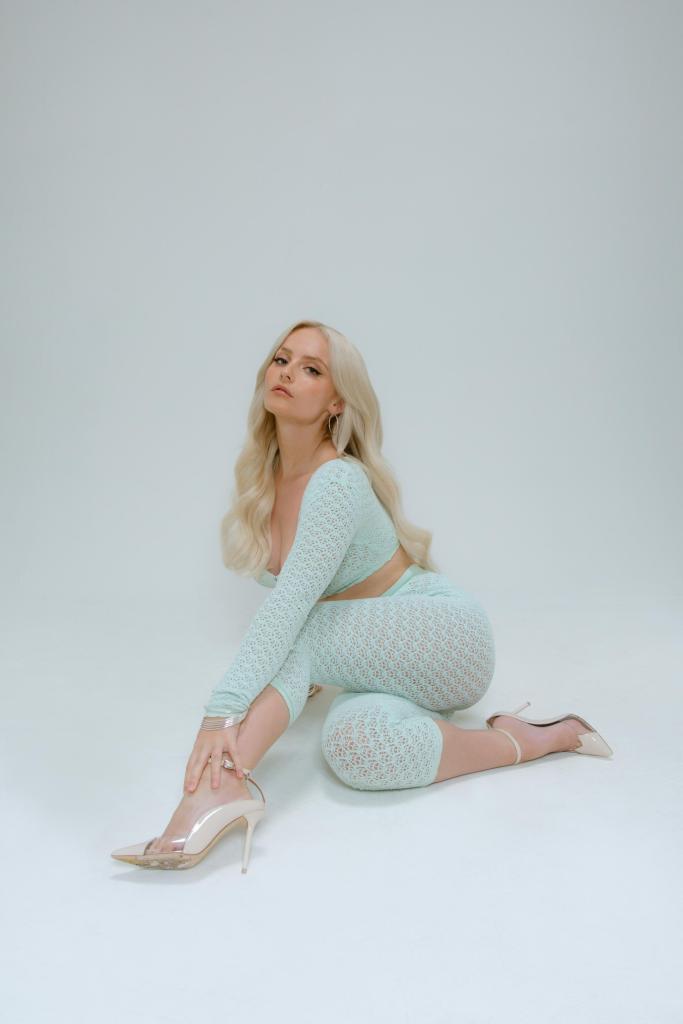
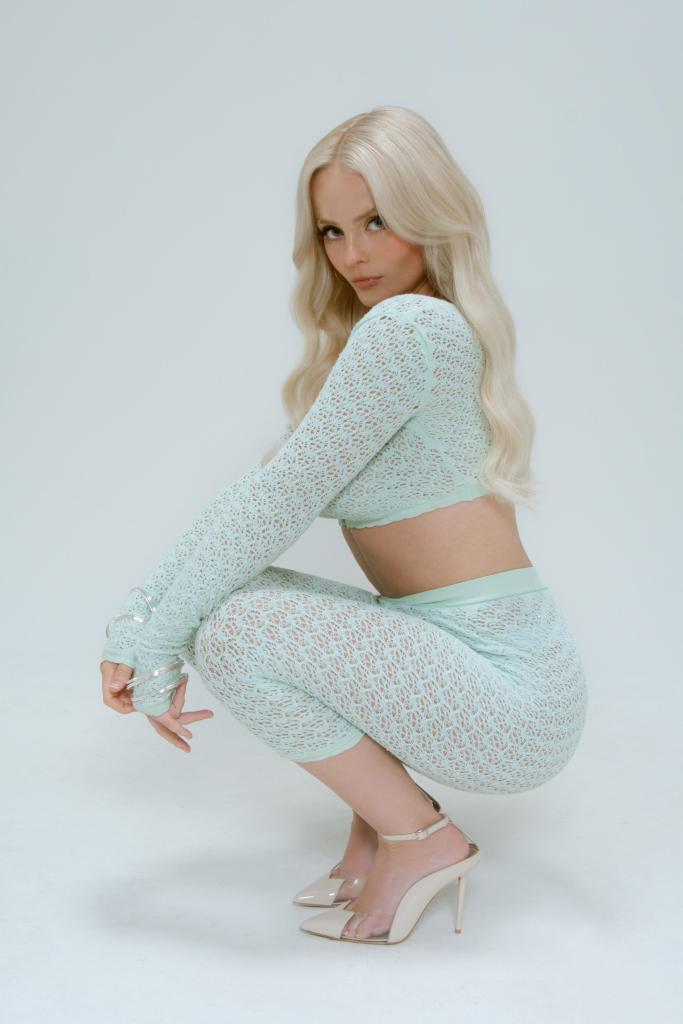
Full look Samanta Virginio / Shoes Malone Souliers
It’s nice that you’ve been able to inadvertently pave this road for yourself where things are interconnected, but you’re still getting the reward and gratification of playing such different people in different periods of their life, each with their own unique personality.
And they’re all on an adventure. I saw a comment the other day when The Forsyte’s trailer came out that said, “Doctor, you’ve left Ruby in the 18th century!” I like how that will now be related to the rest of my career. It’ll be a fun one to keep quoting.
I always like to end with one fun question, and I feel like what you just said is a good transition for that. You’ve worked in a variety of time periods already, but if you could visit one era in a future project, which would you want it to be?
The 1920s! I feel like I’d look great in a flapper dress [both laugh], and I love jazz. I love cigarette holders, even though I don’t smoke. I love the wave hairstyle. That whole era is so chic. I’ve ticked off so many eras already. I’ve done the 1960s, I’ve done the 1800s, but I’d love to do the 1920s.
Maybe we pitch your Bond movie as being set in the 20s. That way you can wear a flapper dress and keep a gun in your garter and be really glamorous.
Sorted! I’d love to be a Bond girl in the 1920s.
The Forsytes continues Monday 27th October at 9pm. Watch and stream on 5.