For Tom Glynn-Carney, acting isn’t merely about the process of transforming into a character to serve the story he’s telling. “It’s all about ducking and weaving,” he told me, and of finding the best way to exist in the present moment as he moves back and forth between those two states of being. It’s also about not knowing what comes next at any given second, standing on the edge and trusting that wherever he falls will be the right spot because truth guides his every decision.
The task becomes easier to complete when he’s working on productions like All My Sons, where director Ivo van Hove gave him and his fellow actors the freedom to inhabit their characters however they wished. For Tom’s portrayal of George, the 31-year-old delved into the emotional aspects of what George is up against in the play. “This is completely personal; this is in the marrow of his bones,” Tom said. It’s clear from discussing his work with him that being moved by the people he’s playing is something that’s in Tom’s bone marrow as well.
PHOTOGRAPHY
Jack Alexander
FASHION
Ahmad Alek
GROOMING
Kim Roy at One Represents
using Hair By Sam McKnight
and Armani Beauty
FASHION ASSISTANT
Lauren Roberts
When he looks back on his résumé thus far, he can clearly see the ways in which he’s been changed by the roles he’s embodied. “I like to come away from projects and feel like I left a bit of myself there with them that I don’t know if I’ll ever get back, but that’s okay. I left a chunk of me there, and maybe I’ll find something else to fill the part of me I left there.” Finding and leaving parts of himself is easier to do sometimes than others, but he knows it’s all in service of becoming the best version of himself he possibly can be. “It’s a lifelong project,” but one that Tom is committed to undertaking with the same sense of dedication and earnestness he pours into his career.
In addition to discussing how he approached playing George in All My Sons, Tom and I spoke about the importance of being present and allowing his emotions to inform his performance, the collaborative nature of the production, what draws him to the roles he signs up for, and more.

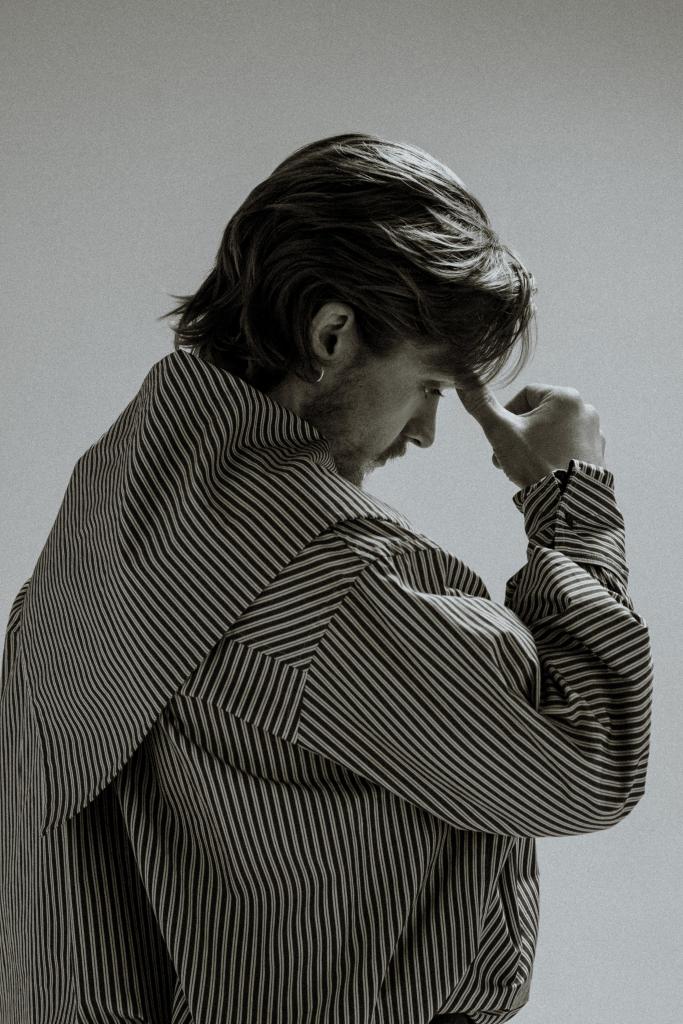
Full look Ami / Shoes R.M. Williams
I’d love to start by talking about your preparation process. For this show, All My Sons, there’s quite a lot of dialogue required in each scene. How long does it typically take you to learn your lines for a project?
It’s very circumstantial, to be honest, and case by case. With this one, Ivo [van Hove], our director, wanted us to be off book by the first day of rehearsal. I personally love working that way. It allows me a lot of freedom to come into the room from the get-go and start making choices, or at least test the waters. It’s way more liberating and free not having a script in your hand because you can’t really lock in with other actors when you’re glancing down at the page. You don’t feel free in your body at all. So, it’s a great way of working. In this case, it probably took me a couple of weeks to get it properly in my head, and the rest is getting it in the body in the room.
You mentioned in a previous interview something similar to this, where Ivo not only gave you that freedom, but he also left character development up to you and your fellow actors for this production. When you were given that creative freedom, how did you narrow down where you wanted to start your character development? Did you pick a trait of George’s you wanted to concentrate on and build him out from there, or how did that unfold?
That’s a good question. I think it’s more to do with following instinct, and my immediate instinct with George was that what you see on stage now is how he’s a highly strung, anxiety-ridden ball of energy that comes in at a very late stage in the play and just blows the whole thing out of the water. It’s been played before in a very straightforward, businesslike way because he’s a lawyer and he’s come from New York with a successful law career. I didn’t necessarily want to bring that level of businesslike approach to George. I wanted him to be raw. It’s not a case he’s dealing with on his desk that he’s going through the motions of. This is completely personal; this is in the marrow of his bones. And I needed it to affect him in such a way. I felt like the stakes had to be as high as they possibly could be, which makes the scene more volatile. It makes George unpredictable; it makes him dangerous. It arms him with heavier artillery than it would otherwise, I think, and raises the stakes of the play for everybody. That’s my reading of it anyway. I know other people might read it differently. In answer to your question, to build the character, it was just purely following the instincts, following what Arthur Miller has put on the page the way I understand it, and then allowing the pieces to fall into place from there.
Speaking of raising the stakes, your entrance in the play is very striking and adds to that layer of tension you’re talking about because you come in from the back and make your way across the front row to get on stage. Do you feel like that’s a natural moment for you to drop into character and embody those things, or have you already done that before you step into the theatre?
It definitely has an impact for sure. You can sense in the room that it has an impact on the audience. They are sort of shunted out of whatever comfort they’ve found in their seats up until this moment, quite abruptly, which is always effective and a good theatrical weapon that Ivo has utilised. It also gives me this feeling that this is my space now as George, and the whole room is my playground, which is disarming for other actors and very liberating for me. Every single component of that moment has to come together and align in an attempt to change the temperature of the space. This is the point in the play where we need a gear shift. All those little decisions—coming in through the audience, the light and changing the sound, changing the pace, having a jolting shock into a different pace—all of those things aid that end goal.
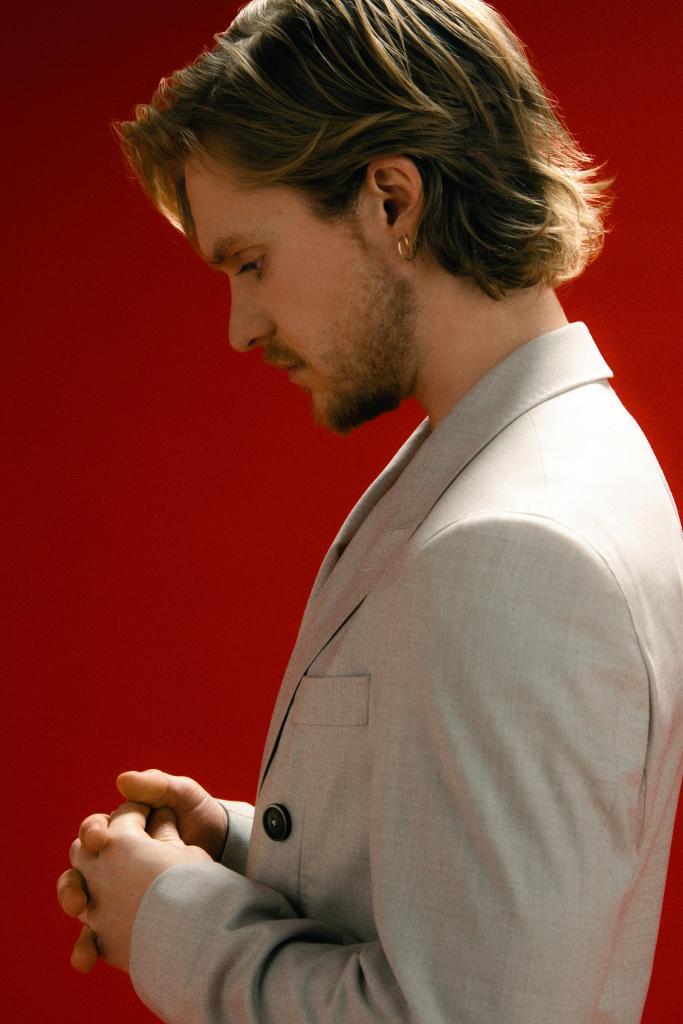
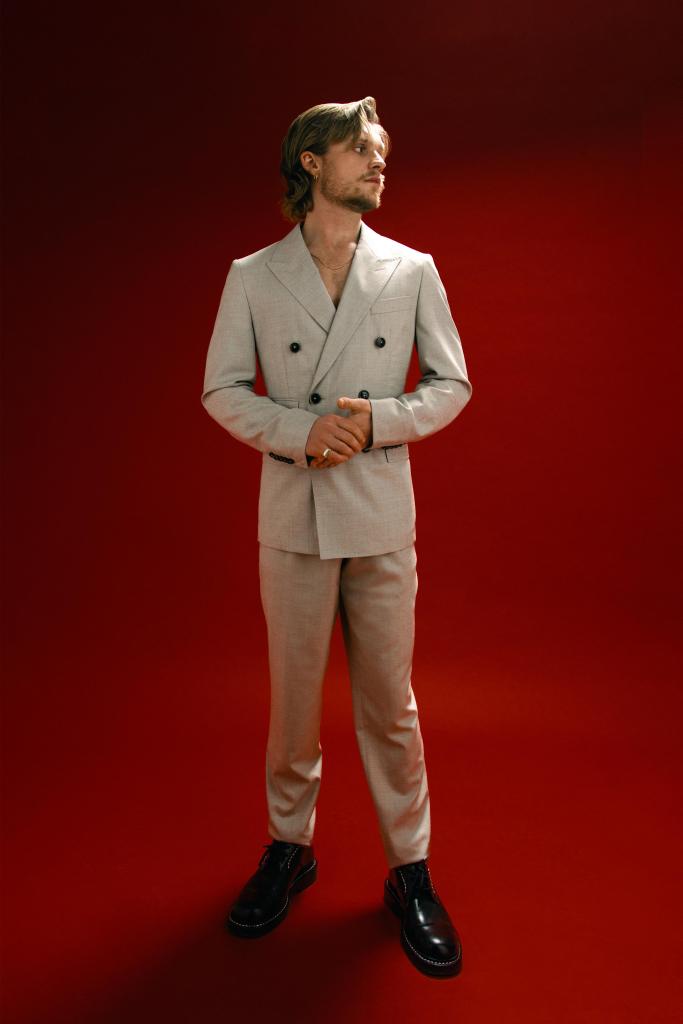
Suit Hugo Boss / Shoes Jimmy Choo
It certainly sounds interesting to be able to stage it that way, where you’re using all of these elements to then play into the impact your character is about to bring into the story. There’s obviously this inherent sense of anger simmering under the surface that boils over in waves as each new element is revealed, but much of that does hinge on George’s introduction, which then triggers the unravelling of the play’s conclusion. Do you feel any pressure playing a character who also serves as this specific storytelling device, or are you just finding more liberation in that?
I don’t really think about it as a storytelling device. I probably would get a little bit caught up with that if I fixated on that aspect of the device that George actually is in the play. I play the situation, and that’s all I can really do as an actor: play the truth of the situation to the best of my ability. And if I believe it, then the chances are that the audience is going to believe it. Once I come off stage, I carry on reading my book or whatever I was doing before I went on. You have to compartmentalise it. You can’t get too cerebral about the responsibility of being that vehicle. If you came on with a different energy, if you came on and played it differently, it might not reach where it needs to reach at a certain point in the play. I don’t think you can think about those technicalities before you go on because you put too much pressure on it, and also you intellectualise it too much, which is a thing that Ivo is allergic to. Any questions I had about backstory or history of the characters, or timeline or anything that was background-related, he didn’t want to engage with it. It was up to the actors to make those decisions and for us all to be on board with that, which is very, very liberating. There’s no ego to that man whatsoever. He isn’t the kind of director where what he says goes; it’s very collaborative. He’s comfortable putting the ball in the court of an actor he trusts, which is nice.
You mentioned in a previous interview that every show is a little bit different because you’re not quite sure what the other person is going to give you and what you’re going to give them in return. That must be gratifying to have had everyone on the same page like that and to be present in the moment to watch it unfold, however it unfolds.
Totally. I think that’s what a lot of theatre misses these days: that element of danger and actors being brave enough to just, like you say, exist and be present and not just provide a carbon copy of what happened the night before. There’s nothing electric to that; there’s no magnetism to that, in my opinion, which is why you watch actors who are theatre animals as sort of a default, and even on camera they’re always the more interesting actors to watch because they are focusing on the other person. They’re not bothered about how they look or where the light’s hitting them or any of this. It’s all about the situation. It’s all about the characters, their motivations, their wants, their needs, the stakes, and you disappear into it. For me, that’s the whole point. When a production is put together in the way this one was, you can do that because you might come in one day and something’s happened outside in your personal life and you’re feeling a certain way, and you don’t have to be afraid of using that to infiltrate the work. If it’s detrimental, obviously, have a gauge on what’s going to be useful and what’s not. But if it changes the tempo of it, if it changes the temperature of it in any way, that makes it interesting and makes it dynamic and shifts other actors as well. It’s all about ducking and weaving. This cast is great for that. They love those offerings. If we all play that game together, we don’t know what it’s going to be night after night, but that’s exciting. We all trust each other. We all feel held by each other. It’s all about serving the story, serving the text, serving these characters, and playing with each other at the same time.


Jacket Sandro / Shirt, trousers, shoes and hat R.M. Williams
I’m sure it’s probably helpful to have that trust because you then feel safe to naturally allow yourself to process emotions you’re bringing in from your personal life and use that to serve the text as well. It seems like you all found this perfect lightning in a bottle with everyone being happy to do that and work that way.
It really is. And we all welcome the version of the person that walks into the theatre that day because it’s unrealistic to think we can all be happy clappy every day. We’re all holding each other, everyone’s exhausted. We’re coming towards the end of the run now. It’s a family, it’s a support system, and it’s nice to be in that environment because it doesn’t always happen that way. I think it is especially important in a play that it feels like that, because you’re in constant contact with the people you work with and you see them more than you see your own family, so it helps to be connected in that way.
Especially when you’re doing multiple performances a week. It’s probably nice, like you’re saying, to actually just enjoy being around each other and to be willing to make each performance special so you don’t feel like you’re solely going through the motions of it, which could get tiresome.
There’s nothing more mind-numbing to me. If it were just a case of reading and regurgitating what happened the night before, it’d be boring. When people say, “Why do you do theatre? It’s the same thing every night,” it’s like, no, if it’s bad theatre, it’s the same thing every night. If it’s exciting and gratifying and electric and dangerous, then it’s not. It’s far from the same every night. Sure, we’re saying the same words, but it doesn’t feel the same. No one ever delivers a line the same twice. That’s the aim.
And it’s a different experience each time for the audiences as well, especially those who are seeing more than one show.
Absolutely. Obviously, the foundations of the piece are set in stone, and the scaffolding is up, but we’re able to then play and navigate our way around the scaffolding in different shapes and ways and routes. But those foundations need to be in place to allow us to do that. The work has to be done prior to it, and I think that’s what makes the thing feel safe. You wouldn’t want to start swinging around on monkey bars that were flimsy. It’s the same concept.


Jacket, sweater, trousers Hugo Boss / Shoes Jimmy Choo
That’s an interesting way of framing that, but it’s true, no one wants to fall and injure themselves! One of the underlying messages of All My Sons is that we can all do and be better—not only in our actions, but in our intentions as well. What are some of the ways you’ve channelled that message in your own life since starting the production?
Many ways, really. I try to take care of myself. I try to give myself what I need in terms of making sure I exercise, I’m eating well, I’m getting enough sleep, so I can be the best version of myself. I feel like without that, you can’t expect other people to come up with the goods or to show up if you are unable to practise what you preach. I feel like I need to do certain things every day to make sure I’m cooking on all the gas that is required. It filters into all sorts of things, like being able to be there for friends and family when they need me. Little gestures here and there to make sure that people remember they’re loved and they’re thought about and appreciated. I’ve done a lot of self-growth over the last maybe year and a half, two years. The theme of this play is to be better for humanity, and I think you have to start with yourself because you can’t work outside in. I think it has to work here [gestures to his chest] first. Feel as secure and grounded as you possibly can be, and that will start radiating outwards. That’s been my journey over the last while.
I completely agree with that. I’m mindful of the fact that I can’t show up for the people in my life the way they deserve for me to show up for them if I’m not the best version of myself, or if I’m not able to figure out how to access the best version of myself when I maybe don’t feel that way but need to show up anyway. Because then you can affect more widespread, positive change when you’re starting from that place and saying, “What can I give to others now that I’m full?”
Yeah, absolutely. It’s a lifelong project. It’s probably naive of us to think we can tick that box and then suddenly we’re able to just be the best version of ourselves all the time. I don’t think that’s how it works. It’d be great if it were, but I don’t think it is. It’s a constant pursuit of that, and in doing so, staying mindful about what other people around you need, and remembering it’s not all about you. People need you as much as you need them.
That was a lovely way of wording that sentiment, and I feel the same. You’ve previously spoken about being drawn to projects that make you feel uncomfortable or push you out of your comfort zone. Looking back on the array of characters you’ve played thus far in your career, what other through-line could you draw between them?
They’ve all experienced or are experiencing some level of sadness. I’m drawn to darker roles. I couldn’t tell you why. Maybe that’s a question for my therapist. [Both laugh]. I feel like I can tap into those a little quicker, though. Maybe not necessarily easier, but quicker. I think there’s a difference as well between ease and pace. I like darker, quite complex characters that can be, at face value, seen as villainous or cold. But with digging in and working out what’s underneath that, my challenge always is to bring a level of humanity to the flicks of this cold, heartless darkness, and to counteract that with moments of vulnerability and fragility so we can see the child in that man who is struggling and who just needs a hug. I find those characters attractive and always very challenging for myself, which is quite cathartic, but it costs a lot. I think roles and projects that cost me that emotional toll are worth my time and worth the amount of investment I like to put into my work. I like to come away from projects and feel like I left a bit of myself there with them that I don’t know if I’ll ever get back, but that’s okay. I left a chunk of me there, and maybe I’ll find something else to fill the part of me I left there. That’s why I love what I do and why I feel so lucky to be doing what I do, because seeing the world from other perspectives, being forced into a different mindset of a different person with different circumstances, I can live 100 lives and comfortably be able to say, “Oh, that’s what living like this is like.” Which is useful in terms of being an empath because I can see why that person is doing what they’re doing, and I’m not going to judge them for it. That’s the worst thing you can do when you take on a new character: start to judge them. It’s better to understand that it’s a circumstantial response that has been triggered by certain things that have happened in the past to them, and this is a product of their own making, or a product of their circumstances in their history. So in a nutshell, the answer to that question is complex individuals with tons of baggage and a nice outlet to let rip.
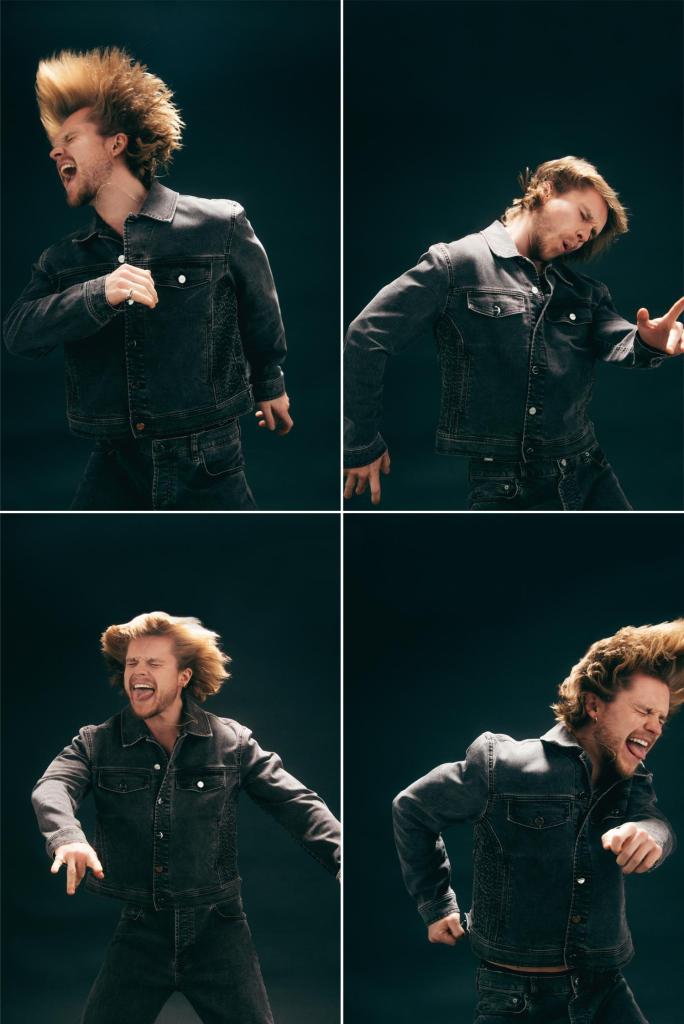

Shirt and jeans David Koma / Shoes Jimmy Choo
I was thinking as I was listening to you that your job must be such a great lesson in empathy because you’re constantly putting yourself in other people’s shoes. It’s important to understand someone’s actions, even if you can’t excuse them. You’re figuring out why this person is the way they are, which then allows you to, like you were saying earlier, bring that into your personal life as well as an empath.
And that’s not to be mistaken with condoning them, which is crucial. Because I know where I stand on many different topics politically and socially. We don’t need to go into that, but I feel like to understand, like you said, the angle from which that person is approaching these things from, or a certain trigger that is switched because of an interaction or circumstance, rather than going for the jugular and being like, “Oh, this person’s evil, period.” It’s not as binary as that, I don’t think.
Without diving deeper into that, because it’s a whole separate conversation, I think that also in understanding, but not condoning, helps us learn valuable lessons in terms of how not to repeat those things and to facilitate more positive change instead.
Totally. And being a soundboard to it. You don’t even have to pass any judgement on it at all. You just have to hear the voice of this character explain themselves, successfully or unsuccessfully, and go, “Okay, well, that’s their read of the situation.” My job then is to put that on camera, or on stage, and breathe life into it and make it as accessible and truthful as I can.
That works well with one of the other questions I wanted to ask you, which is in the same vein—what’s one character you wish you had more time with, either a longer shoot period, more screen time, or another season?
I did a film a few years ago called Rialto, and I thoroughly loved that project and that time in my life when I was living in Dublin. I asked to be put in Dublin, where the character would’ve lived, and I fully immersed myself in it. I loved it. I disappeared for three months, and it was great, and I would’ve loved more time with that character. I think as much as he did exhaust me and every decision he made, I was like, “Why are you doing that?” There was always a reason. There was always an answer for it, and he was doing the best job he could to stay afloat and survive the day and make it to tomorrow. I would’ve really liked to have spent more time with him. There have been projects where it gets to a point sometimes where it’s like, “I can’t wait to see the back of this person for a while,” but I just love what I do, and I feel very lucky to be working on the projects I work on with the people I’m working with, and I hope it’s up, up, and away from here.

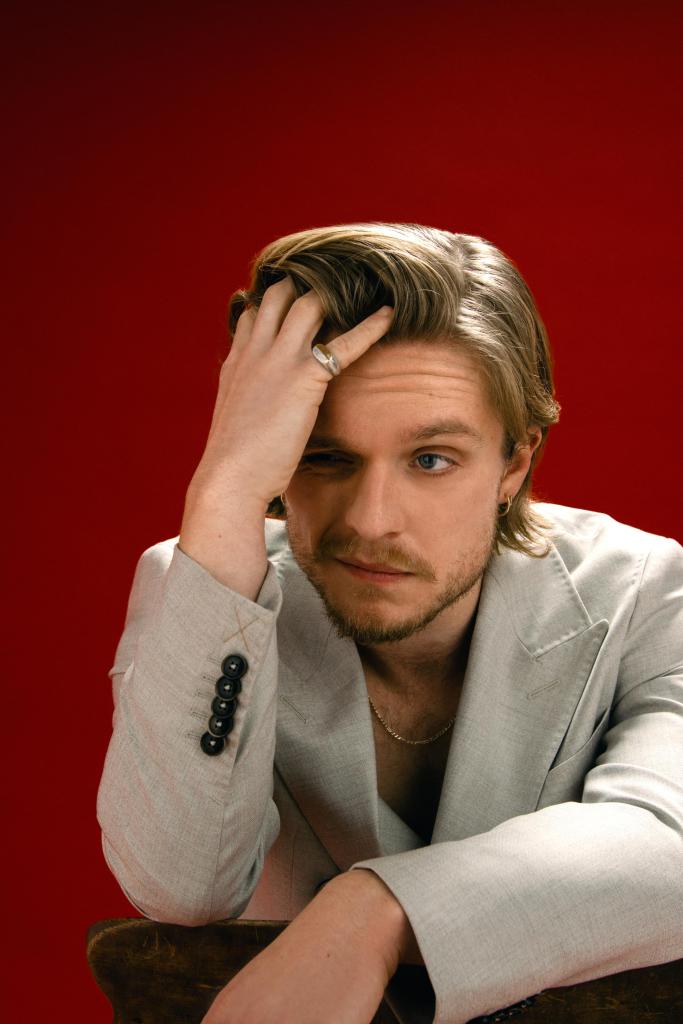
Suit Hugo Boss / Shoes Jimmy Choo
It’s good that you feel overarchingly that it’s been rewarding and you’ve loved living in these people’s skin for a little while, and even if you’re leaving parts of yourself behind with them, you can maybe say it was worth losing that to gain whatever you gained from playing them.
Oh, absolutely. I still feel like I’ve barely started. This is the tip of the iceberg. There’s so much more left to go, and I’m learning all the time, and there’s plenty more to be excited about in the future.