There’s a line in Zora Neale Hurston’s novel, Their Eyes Were Watching God, that reads, “There are years that ask questions and years that answer.” During our conversation, Emma Naomi spoke about the questions she was asking herself at the end of 2025, and about the lessons she was hoping to carry with her into 2026 that would allow her to, in essence, find the right answers. It isn’t always easy to establish a stable flow of confidence, but the London-born actress is channeling her Bridgerton character, Alice, as a means of fortifying her resolve. “I should probably write down some lessons from Alice’s life and take them home for myself for 2026,” Emma said.
PHOTOGRAPHY
Jenna Alexandra Smith
FASHION
Alison Carmichael
HAIR & MAKEUP
Alesha Ledeatte-Williams
PHOTOGRAPHER’S ASSISTANT
Finlay Apps
Learning through osmosis is half the battle. The other half involves being willing to fail and to give yourself grace when you do. As Emma put it, “It’s good to fail because otherwise, how do you learn?” It’s the repetition of this process, of pushing herself to do things even when she’s scared, and of allowing herself to not get it right the first time around, that will ultimately bring about the answers Emma is seeking. Accepting the fear that comes with trying something new is one of the hardest things we, as people, can do. It becomes infinitely easier, though, when we have shining examples to follow.
Emma is one of those shining examples. Whether it’s through watching Alice lead from a place of confidence in Bridgerton, or it’s through speaking with Emma herself, it becomes easier to emulate that self-acceptance when you have someone leading the way for you. She may not be exactly where she wants to be yet, but Emma has plenty of time to rise to the occasion.
In addition to discussing Alice’s character arc in Season 4 of Bridgerton and what it’s like to work with her onscreen husband, Martins Imhangbe, Emma and I had a meandering conversation about life, breathwork, corsets, failure, and more.
You’ve mentioned in previous interviews that you love reading, and I also love reading. What’s the last book you read that you were really moved by?
I just finished reading The Stand, the Stephen King novel, and that’s the longest book I’ve read. It’s the version that he’s extended. If I had to go for moving, though, I’d say The Woman’s Voice by Patsy Rodenburg. It’s about how society has structured the way women hold themselves, and how it changes the position of their voice, and how to get back to a more centered place where not only can you speak in a rooted, connected way, but she also tackles some of the ways that women and men disempower themselves. It’s so profound. She was my voice teacher at drama school, and I recently did a workshop with her, maybe about six or seven weeks ago, and it was deeply profound work. I was so moved watching everybody else work, because not all of us were actors, and people had come for a variety of different reasons. And to see tensions falling away from people, to see somebody stand in their own power and mean what they say, and connect and be present with everybody in the room, is not only a deeply profound thing, it feels very political. I know that sounds strange, but for a woman to own herself in a room without hesitation, without fear, without pulling back from what she’s saying, that can be a deeply political thing. This book that Patsy has written expands on why that is the case, and I loved it.
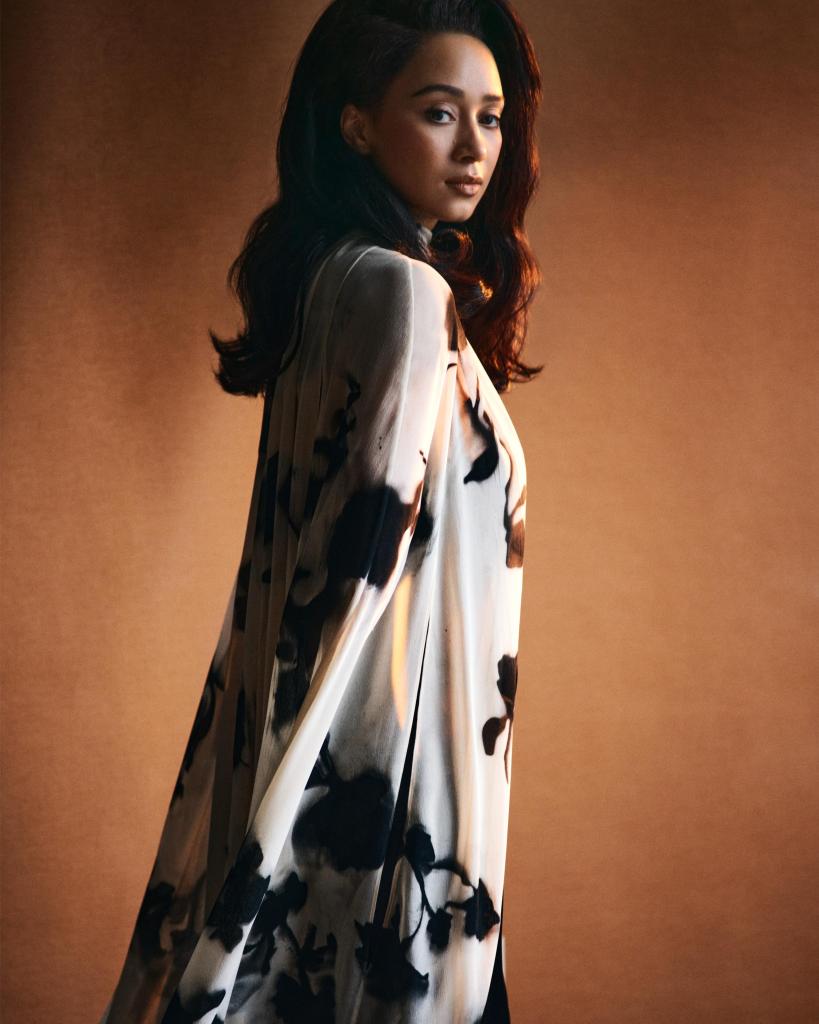
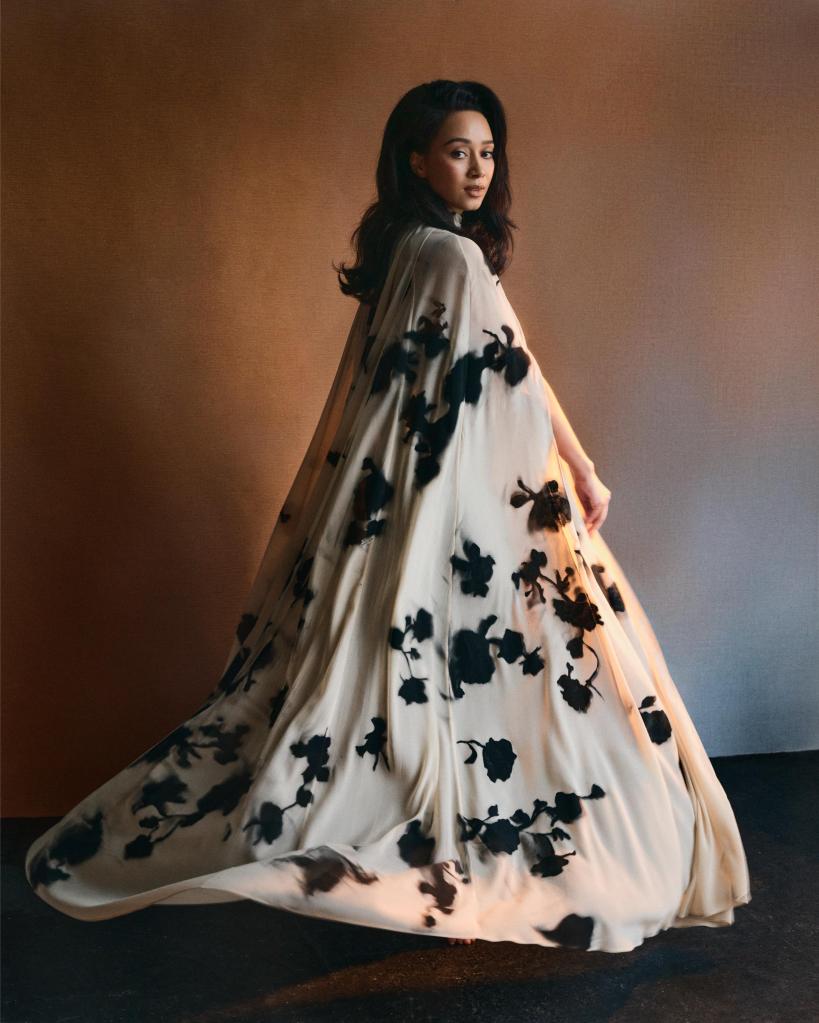
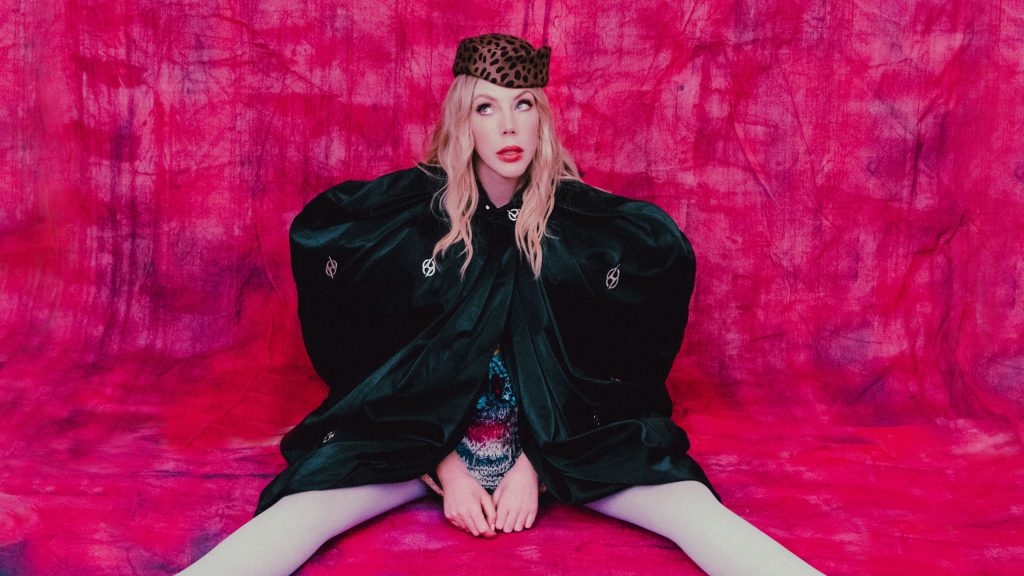
Cape and slip dress Patrick McDowell
That sounds beautiful and powerful. Since I entered my 30s a few years ago, I’ve been on a specific journey of, like you’re saying, taking up space in my own life. And I’ve also been trying to find ways of letting other people sit in my discomfort, versus trying to always sit in theirs. So, I feel like this will help expand on that in a way I hadn’t thought of before.
If you can get the audiobook version, she’s reading it herself, and she’ll definitely make the images clearer because it’s literally from her voice. I really recommend it, and I hope you read it. It’s so good.
I will definitely check it out. Thank you for the suggestion. I’m glad you were able to have that experience. It’ll be intriguing to see how that impacts you personally, and in your work as well.
I’m definitely hoping it improves the work. If not that, then what’s it for?
The work has spoken very well for itself so far, for whatever that’s worth. In Bridgerton, Alice and Will have remained a strong example of what it’s like to have a healthy, equal partnership. How have you and Martins [Imhangbe] built a personal camaraderie and respect for each other as people and actors over the years to help portray those qualities so convincingly on the show?
It was always there from the very beginning. Martins had started the job before me, and I hadn’t really done much screen at all when I started. I was a bit intimidated by the whole thing, but he was there to help me through it. And he’s always been really calm. He’s a theatre actor, so we did the background work together, the character history together, and asked all those actor questions of each other. But it meant that from the beginning, there was always a solid foundation and trust. He’s also a really nice guy. He’s so easy to work with, and he’s very creative, and we both asked loads and loads of questions about what we thought Will was doing before he met Alice, and vice versa. And what life was like with the kids, and all of those things. We did so much history building that it feels very easy when we get to set now.
It’s nice that you’re able to have an existing level of trust with each other and to have that experience of exploring things together and asking questions and equally contributing to the backstory of your characters, because it didn’t exist outside of the show. I love the idea of you two combining your ideas to say, “This is what I think was happening before,” and allowing that to color your performance. Speaking about Alice as an individual character, she’s had such an interesting arc throughout Bridgerton so far, and she has some standout moments during the first few episodes of Season 4. I particularly loved her costume reveal at the masquerade ball, but which moment on set has made you feel most like Alice in terms of being able to completely step outside of yourself and experience something as if you really were Alice and not just playing her on screen?
All that work was done in Season 1, actually, because that is when Alice had no doubts whatsoever. Ever since then, she’s constantly had to adjust to a new lifestyle. In Season 1, she doesn’t care who you are. She’s like, “Yeah, Duke, you are in our space now, and this is what I think. I’m sorry, but I’m not subtle. That’s my opinion on that.” And society’s coming into her space, into her environment, whereas in Seasons 2, 3, and 4, the opposite is happening, and she’s constantly having to catch up, and she’s being pushed more and more into the limelight. I think she’s really quite afraid, to be honest. So, often what I do when I come back to the job is I start with Season 1, and I go back and remember what she’s experienced, which even comes through in the texture of the clothes and the shoes she’s wearing, because she was so grounded then. And then I try to feel my way into where she is now. I feel like she’s trying to come back to that Season 1 level of assurance. As Emma, I’m trying to find that. Being so unbalanced is quite useful in these new life-changing times.
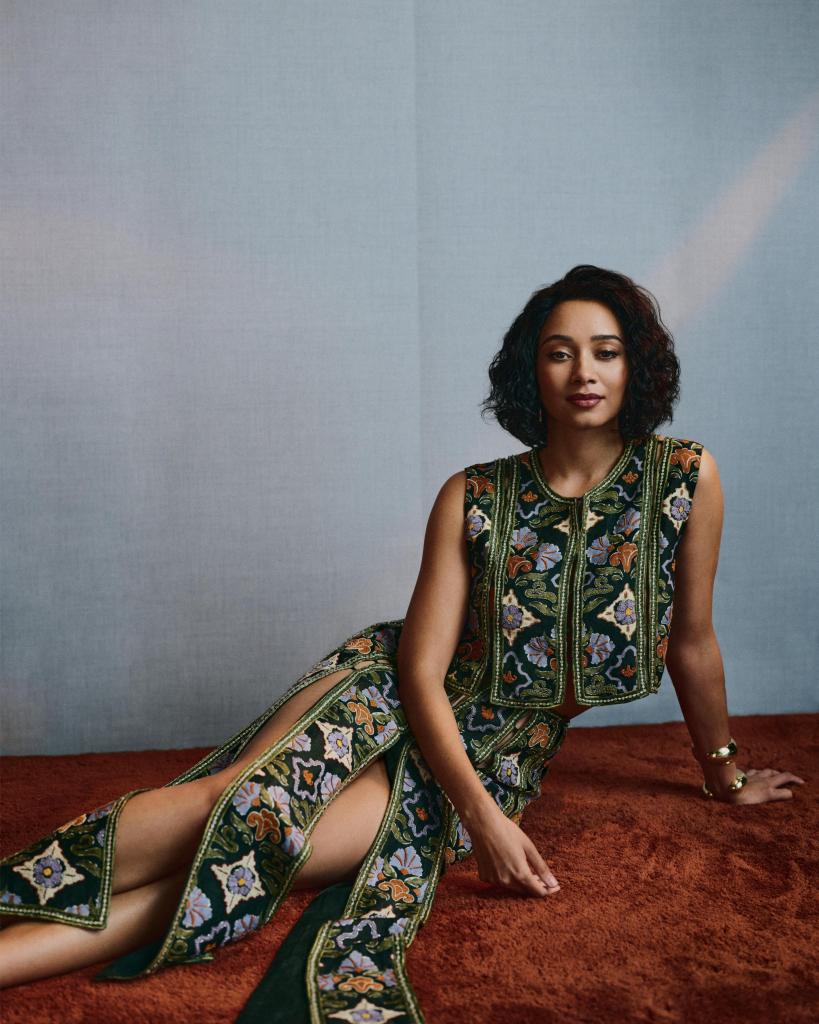

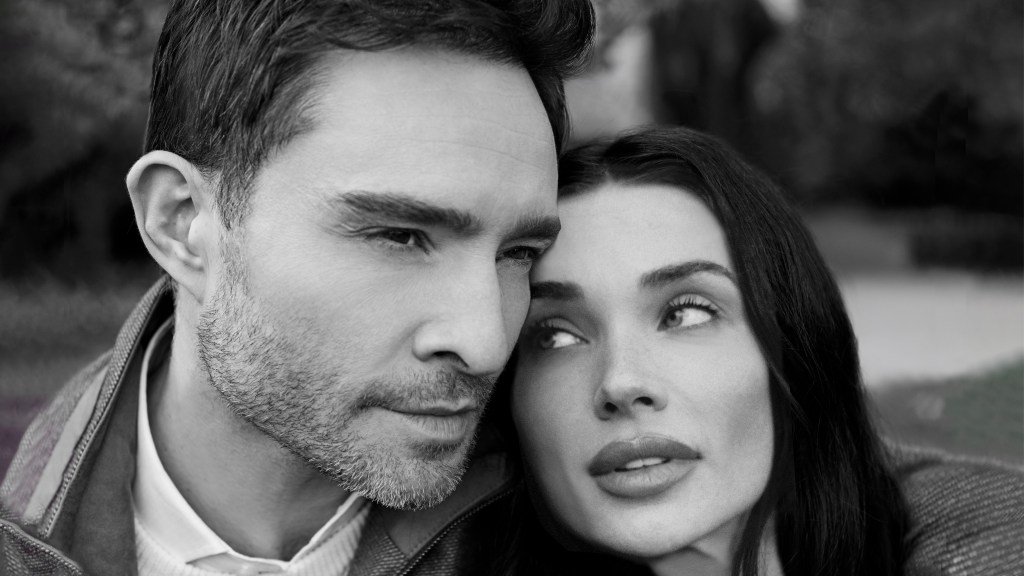
Top and Skirt Alémais / Earrings Alémais / Bangles Dinosaur Designs
That’s a great visual of how even physically stepping into her shoes helps you embody that, or feel grounded or imbalanced depending on where she’s at emotionally. As a person, I tend to feel my way through everything, so it sounds like a compelling approach to step into your character by asking yourself, “What was she feeling then? How has that transformed and impacted the way she’s feeling now?” And then letting yourself feel it as if you were her, versus Emma as Alice experiencing that thing.
Definitely. And the clothes really do help because it’s the same journey for me. In Season 1, my shoes were flat, I wasn’t in a corset, and I had a lot of movement. And then I went into corsets, into heels, into petticoats and things like that, so I became more restricted. Even in Season 3, she inherits her aunt’s dresses that are really, really heavy, and it’s uncomfortable. She can’t breathe. I’m using that physical feedback to help with Alice’s state of mind.
That’s such an intriguing thing to have your performance become more inward as your mobility is limited during scenes where you have to figure out how to take up space emotionally when you’re more physically restricted. I can’t imagine working in a corset and trying to breathe and move at the same time.
It’s not that fun. [Both laugh]. But I am now working on my core strength, so I guess it’s useful for that.
You mentioned Alice having a certain level of confidence. One of the things I’ve always admired about her is her ability to not back down from anything, and to remain steadfast in her confidence even when it’s shaken a bit, or needs to transform into something it hasn’t transformed into before. What’s your favourite quality of Alice’s?
I like that she always finds a way. She’s not shaken for long, and she knows what’s truly important. She doesn’t get caught up in gossip or superficial things. She has her family, and she wants them to be okay, happy, and healthy. She always wants to speak the truth, and she really does value herself. When she’s being moved from what she sees as herself, she’s daunted, but she doesn’t get too overwhelmed by the situation. She’s quite strong and stable. I really admire her, and I do like watching her and Will’s relationship, and I like how healthy they are.
That’s one of the hardest things we can establish as people: stability in our lives and in our relationships, because everything’s going to constantly ebb and flow around you. So, it’s good that she has that base, and then you’re learning through osmosis how to maybe apply that to your own life as well.
She’s like a rock. I don’t think I’m a rock. I would like to be, but I should probably write down some lessons from Alice’s life and take them home for myself for 2026.
To build off of that a little bit, in the past, you’ve described yourself as a shy person, but as a viewer, it feels like you’re blooming alongside Alice as she steps into herself more and more on the show. Do you feel like portraying such a confident character has helped you carry yourself with more openness in your day-to-day life?
I think, like anybody, self-assurance and confidence, they ebb and flow for me. I’ve been lucky that I’ve played such strong women in my career. Throughout all the plays I’ve done, and a lot of the screenwork I’ve done, the characters I play are very strong, and they don’t apologize for themselves. It’s nice to have that channel, for sure. My confidence probably comes from caring so much about my work. But other than that, I’m still working on it, if I’m totally honest.
I wanted to talk to you about that because I’m also quite shy and introverted. I can display extroverted qualities when needed, like when I’m doing an interview or if I’m meeting someone new, but I’m always looking for ways to have my confidence flow more than it ebbs. So, I was curious if being able to step into a character like Alice has impacted your own ability to do that.
There are two things I’ve learned in the last two weeks. One was from the Patsy workshop I mentioned earlier. It got to day four, and I was absolutely terrified. I wanted to leave. I was like, “I can’t do this. I’m not capable of doing this. I can’t get my breath down. I can’t get my voice forward. I’m not on voice, blah, blah, blah.” And we were going to present our speeches to the room, and I was crying in the park. I was like, “I don’t think I’m going to go back.” And I managed to go back, perhaps because of some of the breathwork and the exercises we were doing all week. That day, she was talking about softening the chest and breathing and allowing yourself to fail. And she really instilled this idea from the beginning that failure is good. You have to go through it, and it’s not a bad thing. It’s good to fail because how do you learn? I know that this is cerebrally very obvious, but in my body, it’s not the case. Anyway, all of us forgot our lines, and she just wanted us to breathe, to stay connected, and to reset and start again. Facing this failure and breathing anyway and staying connected has probably been one of the most important lessons I’ve learned this year, because if I do that, then I actually might be able to face anything. And something else that I overheard at an event was, “You can fake it until you make it, but you can also just do things while you’re afraid.”
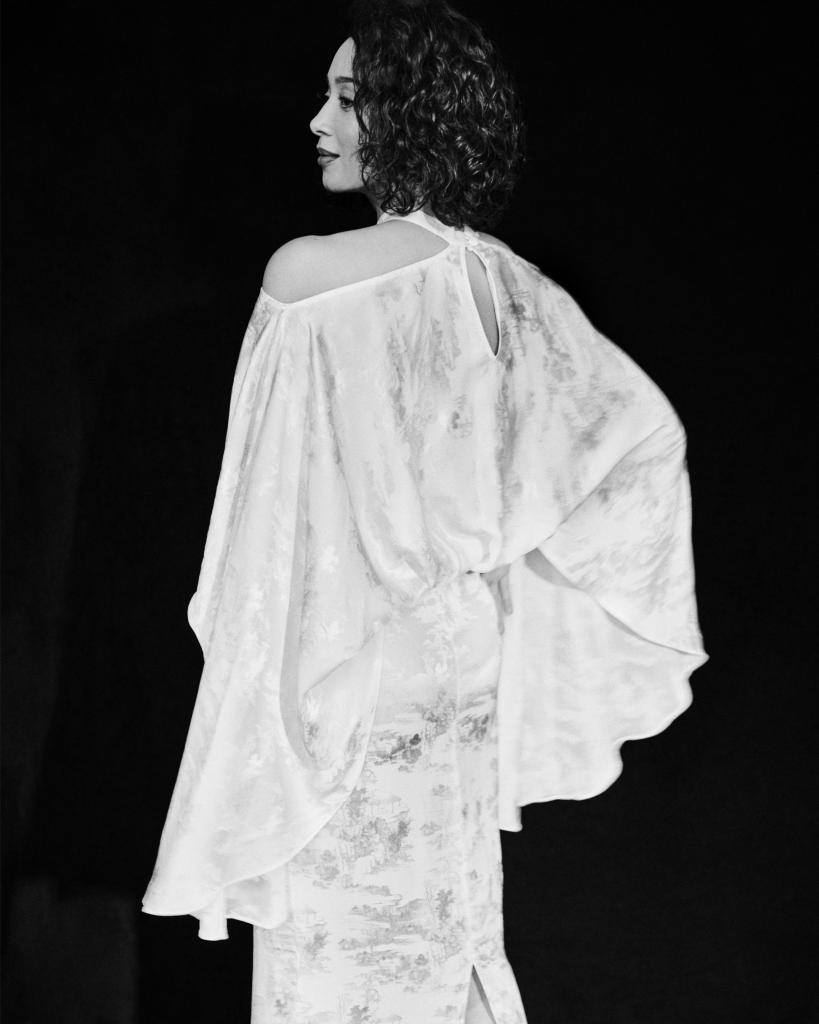
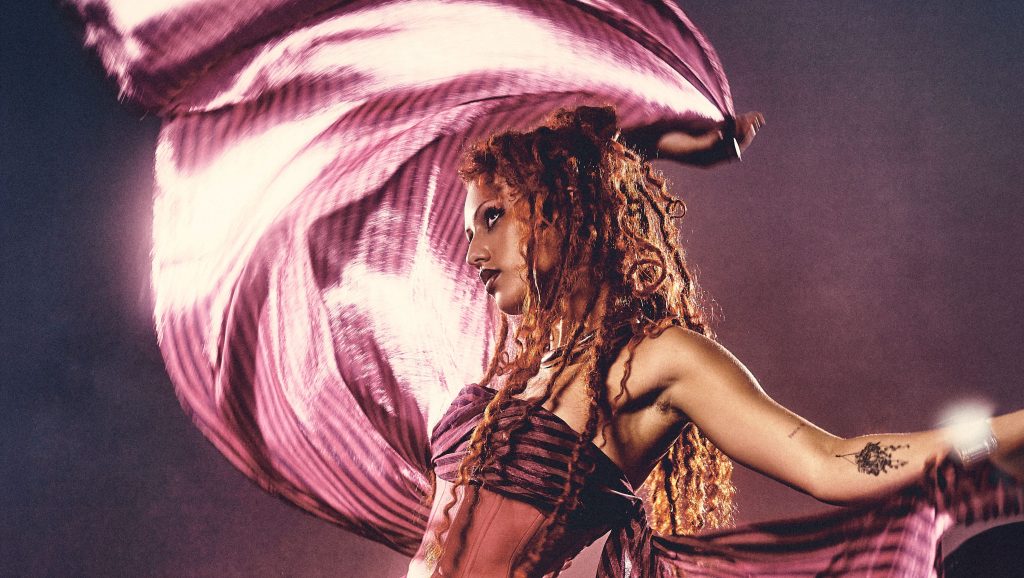
Dress Taller Marmo / Shoes Gina / Earrings Dinosaur Designs
I try to remind myself of that same lesson, that sometimes you have to do it scared. There are going to be perfect, ideal moments where you can center yourself and breathe through it and tap into that energy. But then there are also going to be times where you have to accept that fear is part of the process, and you have to learn how not to be afraid of the fear, and to understand that it’s also teaching you something. It’s hard, like you’re saying, to listen to and honor your nervous system while simultaneously pushing yourself outside of your comfort zone to learn whatever it is you’re supposed to learn in that moment.
The only way we can do it is probably to practice, to be honest. I might have to go and do a couple of those speeches and get on with it. And now that I know I can do it, even if I get really panicked, it’s always good to put yourself in positions where you can overcome your fears.
And to be able to do it in a way that feels safe and comfortable. In this specific instance, you knew you were in an environment where you were safe to do that, and that you’d be met by people who were going through the same process, or if they weren’t, then they’d be able to guide you through it in a way that was comforting and beneficial. That’s such a huge part of the process as well, which comes down to putting yourself in positions to be surrounded by the right people, whether that’s professionally or personally.
Yeah, absolutely. And to allow other people to fail.
Totally. And to give yourself and others grace through the process of that. Jeff Buckley is my favourite singer, and he said in an interview that grace is what matters in anything. I think about that a lot, and about how, in our current version of society, we don’t give ourselves and others as much grace as we should. Because when you do that, you allow yourself and others to fail, and to learn, and to grow, and to become better.
That was profound and beautiful. I really enjoyed that.
Thank you for saying that. Speaking of having these beautiful moments of connection, there are quite a few of those between Alice and Lady Danbury in Season 4 of Bridgerton. There’s a scene between your characters where you’re discussing a prospect that Lady Danbury has proposed for Alice, and Lady Danbury said something I found really moving, which was, “You do not need to dream of something to say yes.” We’ve seen Alice dream some pretty big dreams so far for Will and her family, but what do you think it means to her to be presented with an opportunity to dream about something that’s just for herself?
It’s quite alien to her. I’m not sure that she fully understands what Lady Danbury is potentially giving her. Alice probably saw herself moving into a position where she was more like Lady Bridgerton, organizing in a few years’ time her kids, the balls, and meeting potential prospects, and that would’ve been enough for her. And this challenge is, I mean, it hits her sideways. She didn’t know that it was going to happen at all. There’s an element of choice that’s been taken away from her that leaves her quite vulnerable. But it’s a huge opportunity because somebody saw huge potential in her. Lady Danbury sees greatness there that Alice can’t see.
Sometimes you need someone else to show you it’s there in order for you to realise it yourself, and to then find your way toward that through someone else’s belief in you. Lady Danbury also says something that I thought spoke to that a little bit where she says, “I’m telling you, Alice, to rise.” She’s kind of telling Alice, “I see this opportunity for you. You’re able to capture it for yourself if you’re willing to rise to the occasion.” In your personal life, and only if you’re comfortable sharing, what’s a situation you’ve had to rise to the occasion of? And how did you deal with the anxiety or pressure surrounding that fear of not knowing whether or not you could do that successfully?
Every acting job, I don’t know whether many actors feel this, but the most confident you feel is when you get the job. And then it’s like, “Oh my God, how am I going to do it? I don’t know. Is this voice right? Is this right? Is that right? Am I telling the truth here?” I honestly do feel it’s like that with every role. Everything else in my life has been okay because there’s a clearer roadmap on how to get there, whether it’s a degree or any kind of qualification; there are steps involved, there are the lessons you take, and the teacher has their plan. Even if it was learning a new instrument, you have a guideline, whereas with character work and storytelling, you can’t grade that. There’s a magic to it that maybe only you can understand, but you’re pulling your ideas with a director’s ideas, with the costume department, and it all has to come together in a way that’s organic. I can’t use the same methods for Alice that I used for Lisa Donkers in Professor T. It really does feel like the character requires a different kind of work every time. So then I feel unsure of how we’re going to find that truth, but we always manage in the end.

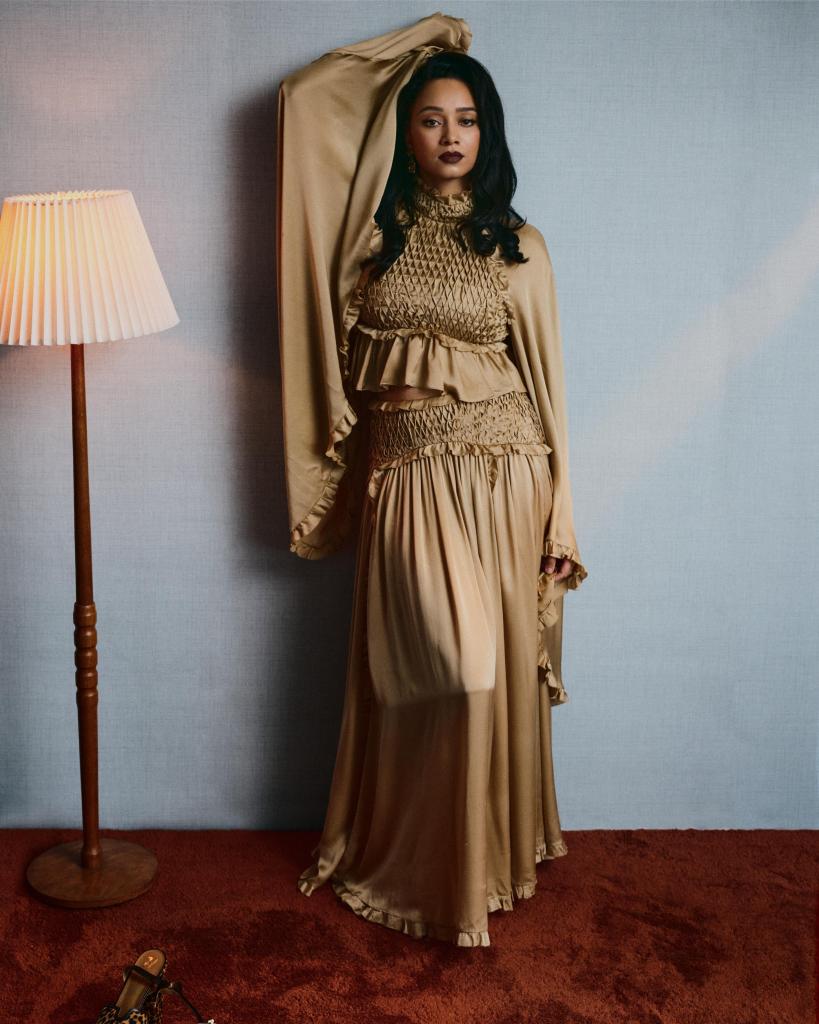
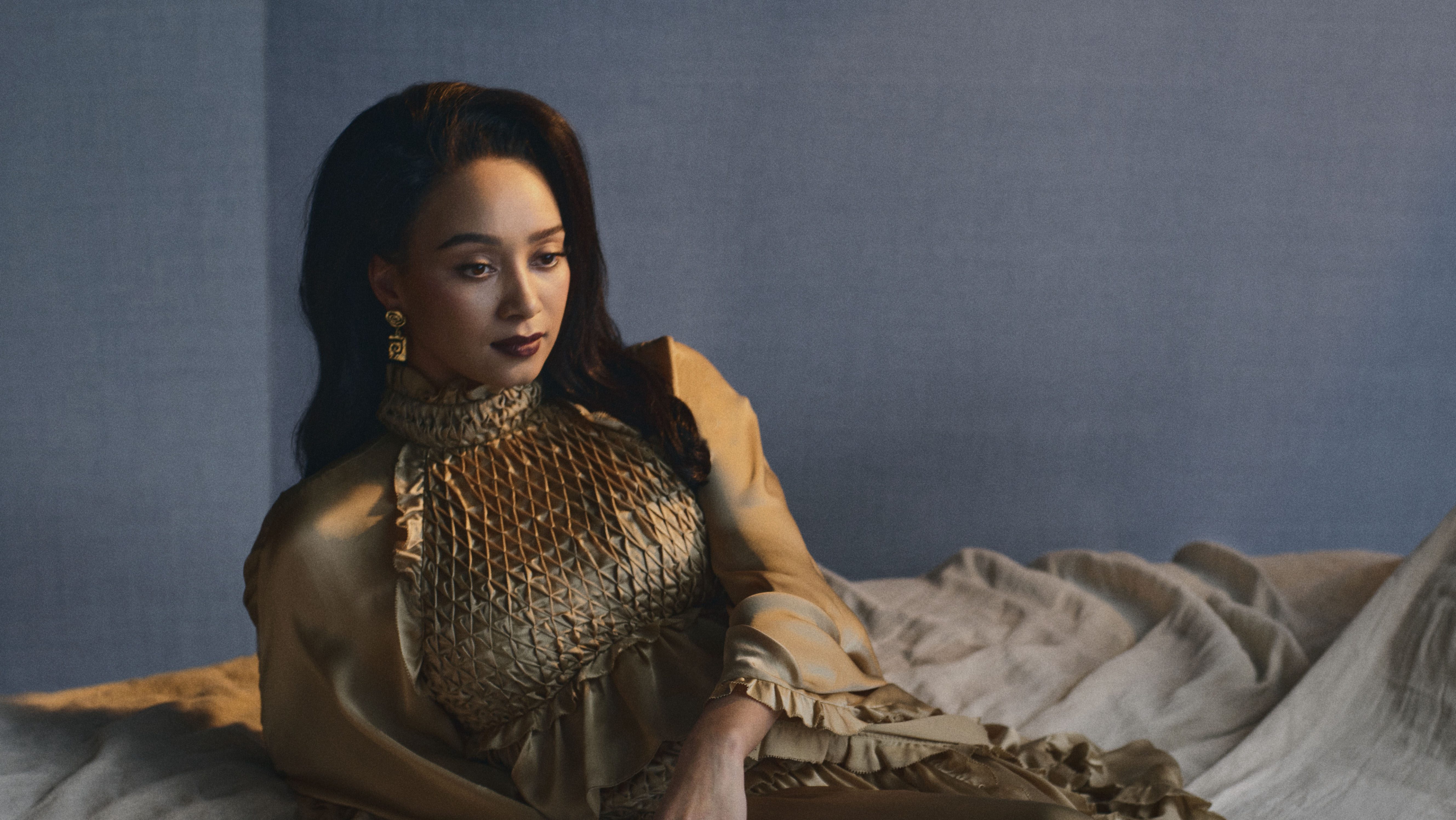
Top and Skirt Zimmermann / Earrings Alémais / Shoes Gina
That must be such an interesting experience where you have a foundation of acting and your knowledge of that, but you’re essentially approaching everything from this clean slate of wanting to tell the version of the truth you want to tell through this character, but you have to be mindful of the fact that there are 60 other contributing truths to it that you have to accommodate for. It seems like it could be daunting to have to start from scratch every single time and find your way back to your confidence in saying, “I’m going to make sure I deliver what I promised I would in the audition.”
Daunting and exciting. It’s also another challenge to not go in on your own preconceived ideas of what this character is, or to be like, “I worked that way last time, and that worked for me last time.” That definitely doesn’t mean it’s going to work this time. And you have other actors around you. For me, the other actors are the most important thing. That relationship of the characters being present with each other more often than not is enough, but I’m still learning. I think I’m still going to be talking like this when I’m 70, but as long as everybody is generous with their energy and ideas and how they collaborate, it normally comes to good. I know I say I’m worried all the time, but more often than not, the work is good.
That’s all you can really hope for, and it’s a positive thing that it’s trending in that direction, where you feel like the projects you’ve worked on so far are collaborative and rewarding and are allowing you to feel the excitement more than the daunting aspects of it. It’s important to always be learning and to be in awe of the world around you, and of what you’re capable of doing and experiencing.
It’s a privilege to be able to even be an artist, and to go around and see the world and step into other people’s shoes. And the amount you learn through history alone, researching this period, for example, is rich and it’s enlightening.
That sounds lovely to have a career that not only presents you with an opportunity to expand on your creativity and artistry, but to learn something new about history, or about detective work, or whatever it is you may not gravitate toward learning about in your personal life. But then professionally, you’re able to access that knowledge, and maybe that opens up a new interest that wouldn’t have been there otherwise.
Yeah, for sure. Or the other thing you can do is practice loads of skills in the hope that it might help you one day with acting. I just started playing drums. I have no reason to do drums, but I want to. And the fact that I can potentially use it at some time in the future for a character or something is also really exciting.
Maybe playing the drums will teach you something you weren’t expecting it to teach you about when you’re timing out a scene, and you’ll be able to frame it through the lens of, like, “I can deliver my performance at this cadence versus this one,” or something.
I hadn’t thought of that. That’s cool to consider.
We’ve talked a lot about what you’ve learned more recently, but what’s one thing you were taught when you studied at the Guildhall School of Music and Drama that you’ve found either most beneficial to your acting career thus far, or that you’ve most often revisited as you audition and prepare for new roles?
I had a mentor called Niamh Cusack. I was connected with her in my third year, and she was very diligent about whether she believed each thought I had. And she was rigorous. She re-mentored me closely through my first year out of drama school. And then one day she wasn’t available, and it was the biggest audition I had had so far, it was for understudying maybe four or five characters. But I had her voice in my head, “I don’t believe you. And if I don’t believe you for this thought, I can’t believe you for the next thought.” And so I began to drill whether I believed this first thought. And if I don’t believe this, I can’t move on, so I have to find it. Where’s it coming from? I had to do a real investigation into what I was saying, and why, and allow the next thought to drop in without preempting. That’s one exercise, but it’s the most valuable thing I’ve carried with me and that I will carry with me all the time.
That seems like a great way of being present and focusing on the moment you’re in. It can be easy sometimes, I’m sure, to jump ahead and think, “Okay, this needs to be said next,” or, “This needs to be brought in next.” So, to have that built into your brain repeatedly to say, “This needs to be earnest, and this needs to be delivered in a specific way, and I can’t move on until I’m fully present in this moment,” seems like a solid way of approaching the work.
It is. And what’s great about it is that it’s not really about having a thought a specific way, it’s about having this thought right now, which can lead to such spontaneity and listening and being present, as you said. It becomes very clear to me when I’m not doing that, and that’s very, very useful.
That’s probably equally beneficial for your scene partners to feel like you’re really listening to them and connecting with them. It’s such a refined skill to truly listen to what other people are saying and not just be thinking of how you’re going to respond to, or how you’re going to react to what’s being said.

Coat Huishan Zhang / Earrings and ring Dinosaur Designs
How can you react if you’re not listening?
Totally. You can’t have a preconceived notion of what you want to say or how you want to react. You have to be genuine in the moment and be moved in the moment.
That’s one of the best times at work because neither of you knows what’s going to happen. All you can do is listen and respond. I’ve worked with such talented people that, regardless of all the work I do, they will pull me into listening to them. That’s when I don’t feel like I don’t have to do any work at all. I’m very lucky in that regard.
It sounds like such a beautiful moment of connection and freedom as well to say, “I’m going to let you pull this out of me and we’re going to ride the wave of this together and see what we’re able to create through that.” To vibe shift to something a little silly, in a previous interview, when you were asked to pick a favourite song, you chose ‘Die For You’ by Prince. Prince was actually my first celebrity crush. I saw him on an episode of The Muppetsi n the early ’90s and was immediately enamored with him. Who was your first celebrity crush, and what was it about them that first got your attention?
Oh God, okay. Do you remember S Club 7?
Yes! I loved S Club 7.
My first crush was Bradley from S Club 7. I had his poster on my wall. They had a show on MTV, and I don’t know what it was about him, especially, but he had nice eyes. They used to run replays of that show at two in the morning, and I’d try to creep downstairs to go watch it. And I always got caught. [Both laugh]. I haven’t thought about that in decades, actually.
I don’t remember what prompted it, but a couple of months ago, I had this moment of thinking about the S Club 7 show. My brother and I loved to watch it all the time when it was on, but I could not tell you anything that actually happened on the show. [Both laugh]. But we loved it too.
I remember one episode where the small guy couldn’t open the ketchup bottle. That’s the only thing I remember from watching, I don’t know, countless weeks of that show. And I think Jo opened it for him.