After a triumphant run in the titular role of Romeo and Juliet at the Globe Theatre last year, Lola Shalam has another iconic Shakespearean character under her belt as she wraps up her second production, this time as Rosalind in As You Like It. The promising young actress is here to prove her versatility.
We spent a morning with Lola in between performances, to deep dive into the process of navigating renown Shakespearean characters, the inner workings of one of London’s most signature theatres, and what’s next for the budding star’s career.
PHOTOGRAPHY
Joel Smedley
FASHION
Alex Greenham
HAIR & MAKE UP
Lola Shalam
SPECIAL THANKS
Shakespeare’s Globe Theatre
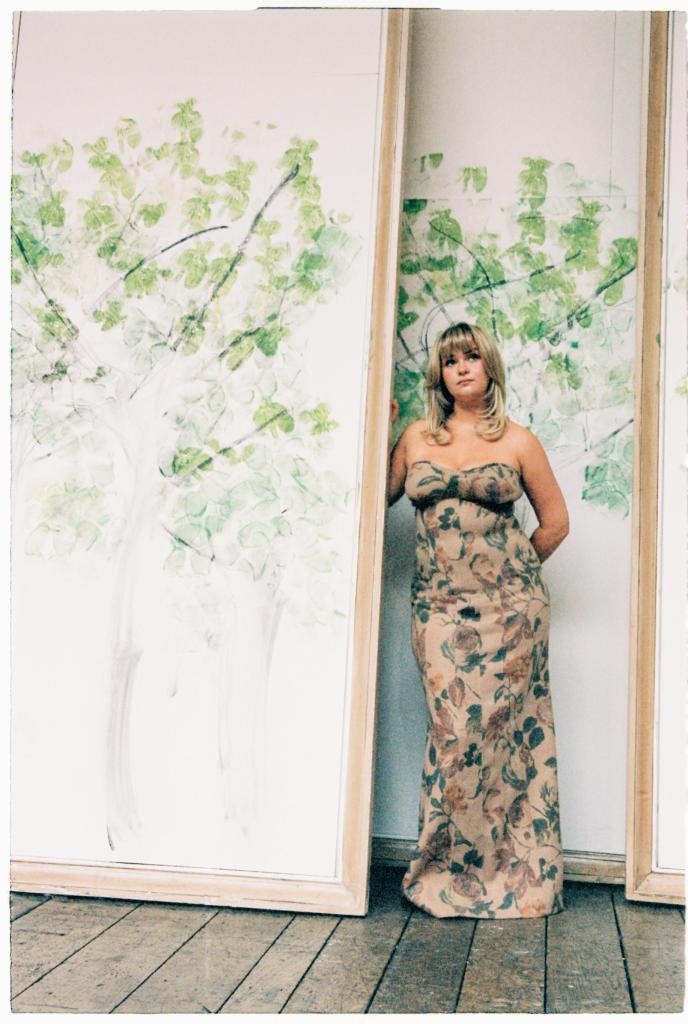

Gown Label Asther Garg
So this is not your first time being part of the cast at Shakespeare’s Globe. How did the conversations come about between Romeo and Juliet and this? Did you approach them?
So there was no conversation. Which was slightly terrifying.
You just never left.
It was bizarre because we… The end of Romeo and Juliet felt so embarrassingly emotional. Like I was like the kid on the last day of school that really doesn’t want to leave. It was a bit embarrassing. And then it was a couple months of just normal… I was at a job interview to like, sell candles, and then got an email saying ‘do you wanna do this?’, which was insane. And I was in disbelief, and I didn’t really know the play, so I was really panicking and then I got a text from Sean [Holmes, co-director] like two hours after that email saying, ‘I believe I’ve offered you a job.’ I was like ‘yes, I’m so sorry, yes please, I’d love to do it, but I haven’t done my homework yet! So yeah it was, I think, Charlie [Josephine, co-director] and Sean, had been sort of considering it for a while, but I was totally in the dark. So yeah, it was a beautiful surprise.
But you were also in the good books, by the sounds of it.
Yeah, thank God. I didn’t piss them off too much.


Dress Self Portrait
Was there anything from the experience of playing Juliet that you kind of carried through? I guess the familiarity of the team and the theatre itself probably helps you feel more comfortable transitioning to Rosalind.
Yeah, it was nice to come back to a stage. You’re like, ‘oh I know how this building works, and I know what it’s like when it doesn’t work.’ And so that, you know… it was totally jumping off the deep end last year [for Romeo and Juliet], not a clue. So it was nice to know the capabilities of what I was walking into.
You’re a seasoned pro now.
Oh god, far from it. Far from it [laughs].
And how actually does it feel to play two iconic Shakespearean characters? To have them both on your resume already?
Silly. It’s surreal. It’s not actually something I ever thought I would be able to do. Or be invited to do. Yeah, I’m really, I think I’m still in denial. I don’t think I will acknowledge that this is what happened early on until like years go by and I’m going, ‘what was I doing?’ But no, it’s amazing, it’s beautiful. And they’re such gorgeous parts.
I do think that it is like that a lot though when you’re a creative and when you’re freelance. You’re always on to the next thing and you’re always thinking about what the next thing’s gonna be and you actually just… don’t appreciate it in the moment.
Yeah, it’s hard to sort of give yourself a… It’s hard to take the time to be like, ‘I’m here!’ Celebrating that isn’t easy. Which is weird, because it is when it’s anyone else.


Full look Arrange
It’s funny, I feel like the photographer’s equivalent is when you print something off, because you actually take the time to look at it.
Yes. And just be like, ‘wait, I did that.’ I think that’s why the end of jobs are so… that’s maybe why the end of Romeo and Juliet was so emotional, because it was only then that we were like, ‘oh my God, we did it. We did that.’ I think the same thing will come on this one.
Last time, when we spoke about Romeo and Juliet, you kind of went into a bit more detail about acclimatising to the Shakespearean language and how when you were younger – kind of like what you just said – you just thought you weren’t someone that could ever, or would ever, do that. But you said actually it was when you were performing it, that it really clicked and you felt you related to it more. So I’m keen to know, what it’s been like in comparison this time, learning a new script, was it the same kind of process? Was it like, ‘I don’t know if can do that’?
It was such a different process, and I’m still figuring out what I need before doing it, you know. It’s not like I’ve got a thing figured out, I’m like, I’ll just follow this protocol and I’ll be alright. But with Juliet, I like, learnt all my lines in the bath. It was in the middle of the night. It was like this really secret, intimate sort of connection that I built with the language for months and it felt really special. It felt very special and intimate. Sacred. That’s what it felt like. And with Rosalind, there is so much that she is thinking in the moment and so much of it where you don’t know if she’s lying or not. If she’s just coming up with this thing. So much of this play is about wit, in a way that Romeo and Juliet was about heart. And so weirdly it was like, I couldn’t sit and… and get to know the words because they needed to be live and kind of off the cuff. And so a lot of it, the process for As You Like It was about trying not to think, which was the opposite. So it’s been really funny, it’s been really interesting to deal with these two totally different young women, and their different ways of thinking. They communicate in such a different way that it wouldn’t have worked if I tried to fit it in the same mould.

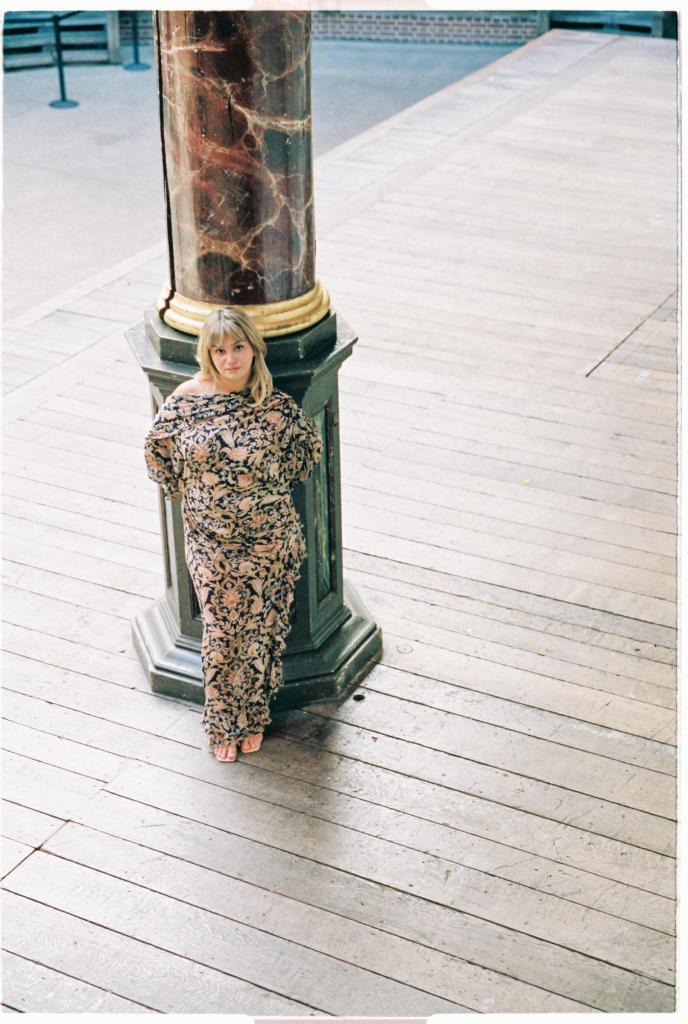
Dress Zimmerman
Do you feel like it’s more about the delivery, this time round?
Yeah, I think when you’re doing a comedy… all of us are searching, in that first 20 minutes of the show, who’s up for it. It’s like ok, who’s got a little twinkle in their eye that I can have some fun with tonight? And at which point am I going to catch on to that? You know what I mean? It’s also live. I’m working as well with like Jonnie Broadbent in the show and he’s got… it’s like masterful, what he does every night. But yeah, it’s the live delivery of this play, one thousand percent.
And is there much audience interaction? With Romeo and Juliet, you came out on the balcony, and came like into the crowd, and the crowd had to disperse to make way.
There is, yeah, in a different kind of way. It’s sort of, you enlist the audience. I think in Romeo and Juliet, because of the heart of the play, it just carries on. It’s just four days of chaos, people have got to keep up with, it really matters. Whereas this, there is no plot, there’s no clock in the forest, there’s nothing, it’s just everyone fucks off into the woods. That feels like a different journey to go on. And it’s really dependent on the audience that is in that afternoon, or that evening. Totally. They dictate a lot of the mood.
Romeo and Juliet had the Wild West theme going on as well, which I know you alluded to being responsible for changing the dynamics, so that it’s a bit more accessible to audiences. It kind of changes the goalposts a bit, in regards to what’s relatable. Is there anything that has a similar effect with this production?
Yeah, so we’ve set it in sort of 17th century France. So it’s very like Rococo, big massive skirts, huge wigs, all the blokes have got their calves out, you know, it’s great.
Sounds like a bit of me.
It’s dreamy, huge calves. But yeah that helps because at the beginning of the show, we’re in this sort of court world which is highly performative, you’re really being perceived all the time and everything is about etiquette and courtesy and status and honour. And so then to kind of take that off becomes really exciting and it does kind of unlock the structures of the world of the play in a similar way that Wild West did. It’s fun.


Coat Barbour x Farm Rio
And I mean – kind of a broad question – but what is it like working with the whole Globe ecosystem, like movement directors, other actors, consultants?
Yeah, it’s amazing. There’s so many members of a team here and you can feel it in the building. It’s sort of, yeah, it’s unlike anything I’ve experienced before. But on this production, Charlie and Sean were co-directing, as well as Charlie playing Orlando. So that was an interesting one coming into it. It’s like, how’s this going to work? But it couldn’t have been smoother and they couldn’t have been more generous and, you know, fizzy and exciting and kind and… and Tamsin on movement, Simon Trinder on text, you’ve got all these different people with their sort of cauldron of tricks and it’s like, ‘oh my god, I don’t know what I’m doing for this bit, maybe I need some text help, some movement help, or some vocal help’. So yeah, it’s definitely felt like a group endeavour, which is beautiful as well. It’s like a team sport, definitely.
How have you found navigating The Globe being an open-air theatre? You’re completely at the mercy of the weather. Has it often been cold or wet?
Listen, we were doing tech during the heatwave.
Oh god, of course.
That was hard. That was hard. But also I’m intrigued as to what it’ll be like as we’re going in through October, as it starts to get colder. It’ll be fun. But no, it’s full-on. I think I only had to do the balcony scene with an umbrella once because we came through the yard and that was quite fun.
Was that in a full-on downpour?
Yeah, yeah, yeah. I had to do the whole scene.
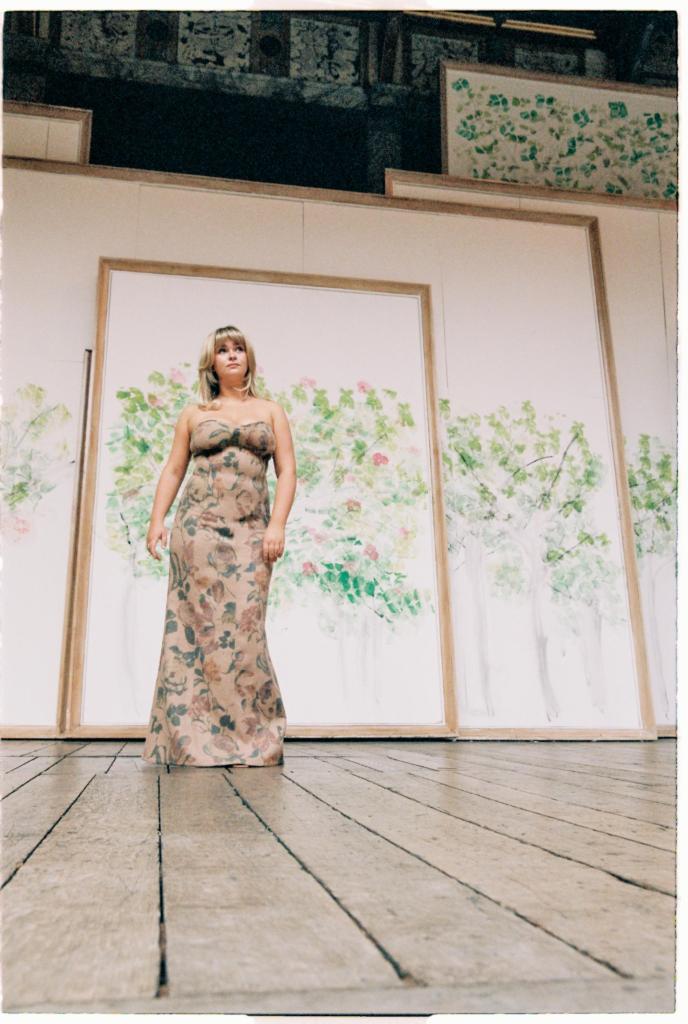
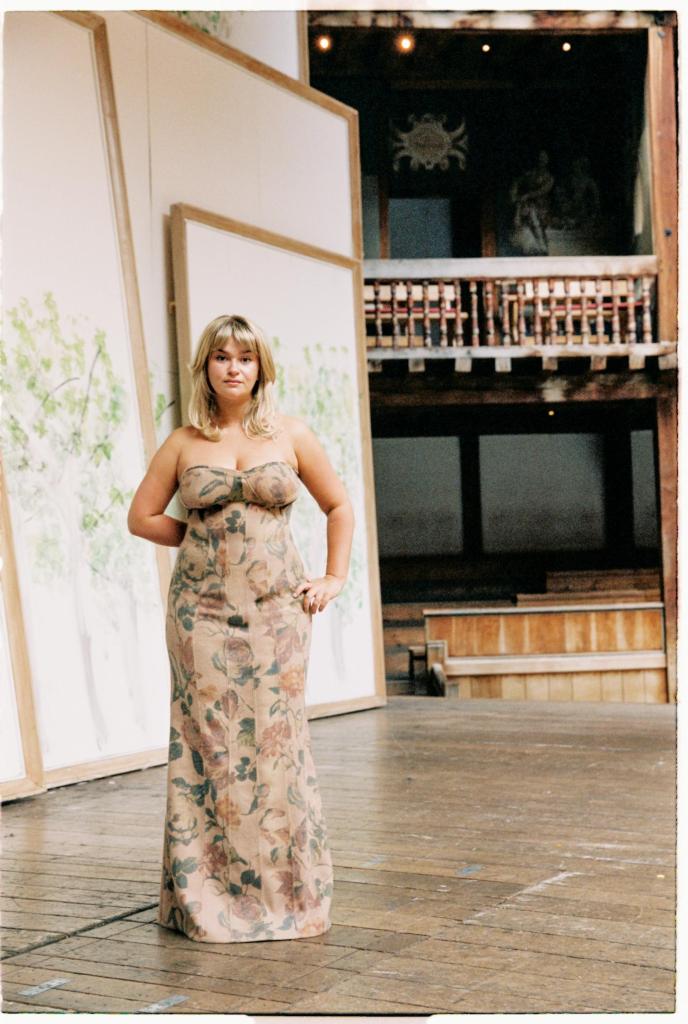
Gown Label Asther Garg
And you had to have an umbrella?
A little PVC, like clear umbrella. It kind of took us out of the Wild West theme a little bit, but I don’t think people will minded.
It’s more than the audience had! Do you find the costumes help getting to character?
Oh God, they do so much. They do so much. Because a lot of the rehearsal process for As You Like It was, you know, knowing that eventually I was going to be dressed as a man, saying all of these things, doing all these scenes, and trying to understand it all but trying to imagine myself being perceived as a man. It wasn’t until we sort of went in to do a wig fitting and I tried on this little kind of Beatles-y wig and my chin jotted forward and we found a sword and a cape and all those things that affect how you contextualise. It’s like, you know, when you’ve got something new to play with when you’re a kid, and you discover what a handbag does. You know what I mean? That has been really helpful and fun to figure out. And that beginning, the dresses, they’re so restrictive that you kind of can’t help but…
Suddenly you’re not Lola anymore.
Yeah, yeah, of course.
What do you think makes Rosalind such a compelling Shakespearean character?
I think she is so intelligent. But she has the ability, and the privilege really, to be – because of her circumstances – totally impulsive. And there’s not many people that you get to witness in real time go, ‘what if I did,’ and then just do it? The intrusive thought and follow through is impeccable, and it’s exciting, and it makes you go, ‘oh my God, I can’t believe that she’s doing that. But also fair play, because she can. I love that. Yeah, towing the line between the joy of that impulsivity, but then also not indulging and knowing that there’s a reason behind all of this. It’s not just because she likes it. It’s all in aid of testing this person.
And have you always felt like that? Or do you feel like your opinion of her changed from when you first read the script – not really knowing much about it – to being well-versed in her now?
Yeah, yeah, so much of her text is in prose, it’s the opposite of Juliet’s kind of emotional outpouring of truth, it’s all constructed in a way that she’s trying to be tricksy. And there are of course moments of profound honesty with Rosalind. But I think initially I was finding it really hard to know what the cost is for her. And I think I’ve grown to understand that she’s brilliantly constructive in the way that she engages with Orlando and with herself and with her own identity throughout the play. But it was something that was intimidating at the beginning and I didn’t understand all of it. I was like, I don’t know what she’s on about for so much of it!
You just needed the context.
Yeah, yeah, yeah. But I grew to love her definitely. In all her madness.
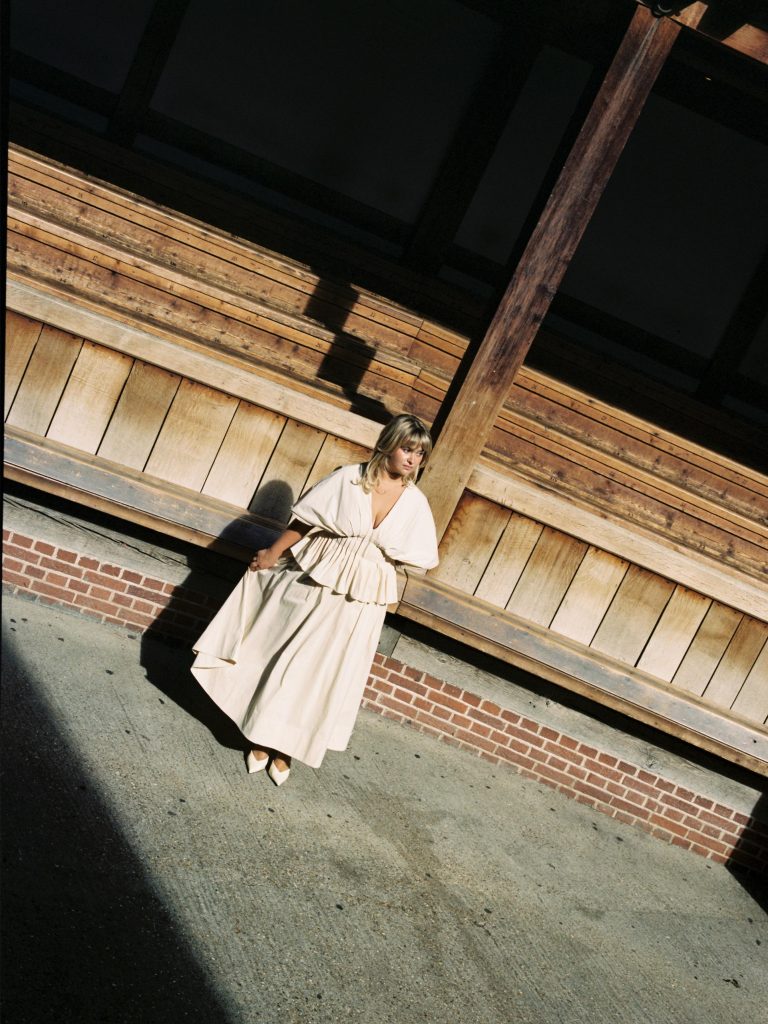
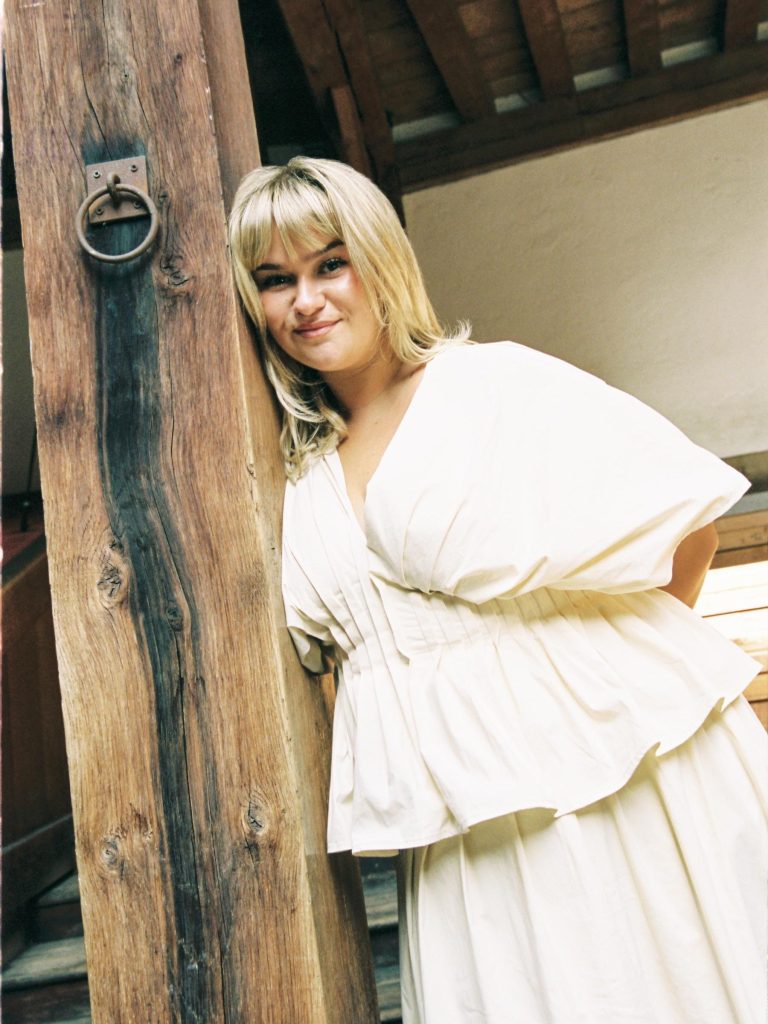
Full look Arrange
Have you got a particularly favourite scene that you like performing?
Yeah, there is, I get to bash Charlie Josephine over the head with a bunch of flowers.
Nice.
That’s quite a dream come true. Nothing against Charlie. Like, just to bash flowers over anyone’s head is kind of phenomenal.
Do you find that when the good reviews come in – as they have been – that it kind of adds like a level of pressure? Or is it just background noise?
I don’t know, I don’t look at them. Because I can’t, for my own brain. But I think as well it’s so weird because reviews are a big thing if you’re outside of a show I think. But when you’re in day-to-day… It’s just… I’ve got these people in front of me, this audience, to impress. We’ve all got to care about these ones. Yeah, We’ve got to try and make them have a good time rather than, you know, worrying about anyone further afield.
Is there anything that you do, or don’t do, to prepare? If you know you’re getting into a production for weeks at a time, is there anything that you stop doing, or do you kind of lock in? Are you quite good at just jumping into character and jumping out back to normal life?
No, I do go a bit hermit for a little bit, but I love it like. Lock the doors and sort of just be in a room talking to yourself for a bit, trying to understand a new person. It’s like my favourite part and I’m a big homework before rehearsals. Most of it’s out of panic. I’ve got to make sure that I am not gonna fall on my face
One thing that I do really like, that I wanted to touch on, was that the Globe do £5 standing tickets. I just think it makes theatre so accessible. With gigs and shows, I often wonder how people afford it.
It’s absolutely mental. I don’t get it.
I feel like ticket prices these days can easily ascend into three figures, if you want good seats.
Yeah, I cannot stress how important I think it is that theatre becomes more accessible. It’s insane. It’s insane. I know so many actors that are in shows, that wouldn’t ever be able to go and see the show they’re in, which is insane. And it’s boring. You’re speaking to the same people, about the same ideas that we’re all in agreement of what we’re doing it for.
It’s like, when’s the change gonna come?
Yeah, and it’s why working here feels honest. It’s, you know, yes, you’ve got the avid theatre fans, but you’ve got schools, you’ve got tourists, you’ve got people who would want it to come here on their bucket list. Somebody who’s just wandered in and thinks they’re going to museum and then all of a sudden they’ve got, you know, 20 actors trying to get them to sing. And it’s good, you know, you can walk away and go like, ‘listen, some people’s lives have changed today’.
Did you do a school trip?
Yeah, I came here in like 2013 to watch Merchant of Venice. And I have a picture of me, like, leaning on the stage. We were like the state schools, you know when they’re all in at the same time, sort of who can be the loudest. It great fun. So yeah, being up there now is surreal. Full circle.
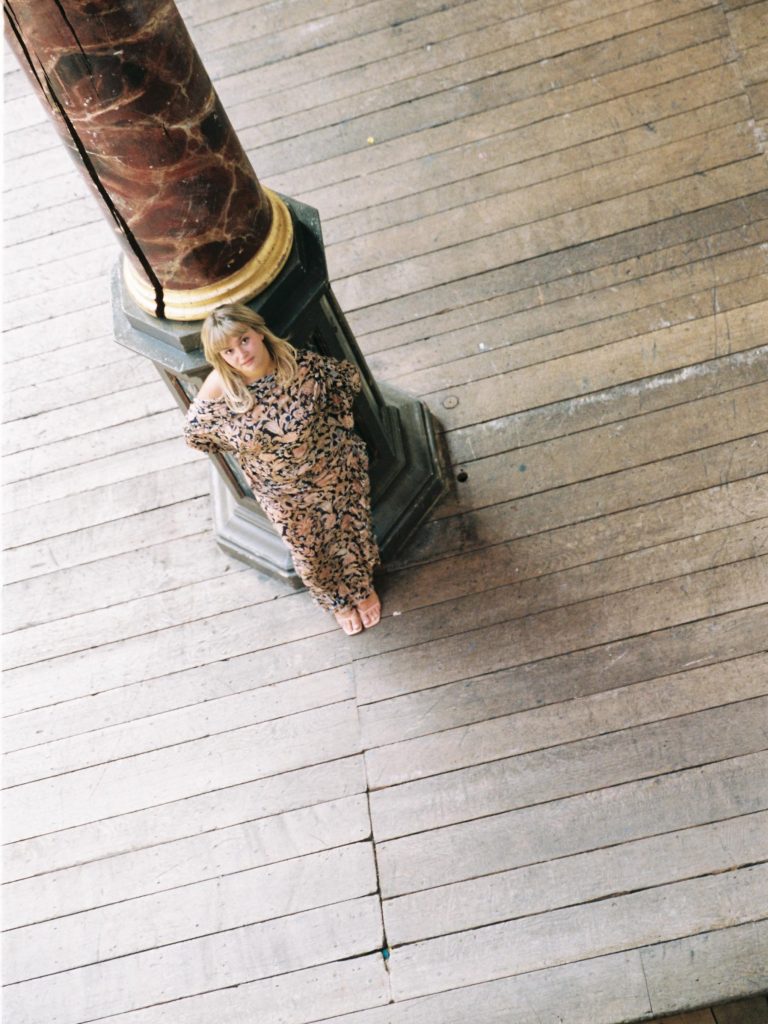

Dress Zimmerman
What would be next for you after this? Do you think you’d do another Globe Theatre production? Or are you taking it day by day?
I’ll be taking it day by day. I’ll take what I can get [laughs]. I’m just happy to be able to do anything that comes my way, and if it pays my rent, brilliant, and if it doesn’t, I’m still just happy to be here. But yeah, I’m up for anything. I love theatre, I’m really passionate about theatre. But I’d love to do something that’s got some bite to it. Totally.
Thanks Lola!
As You Like It plays until Sunday 25th October. Find tickets and performance times here.